The Constitution Was a Punishment. He Turned It Into a Weapon.
Most people who change the world don't see it coming. Thurgood Marshall certainly didn't.
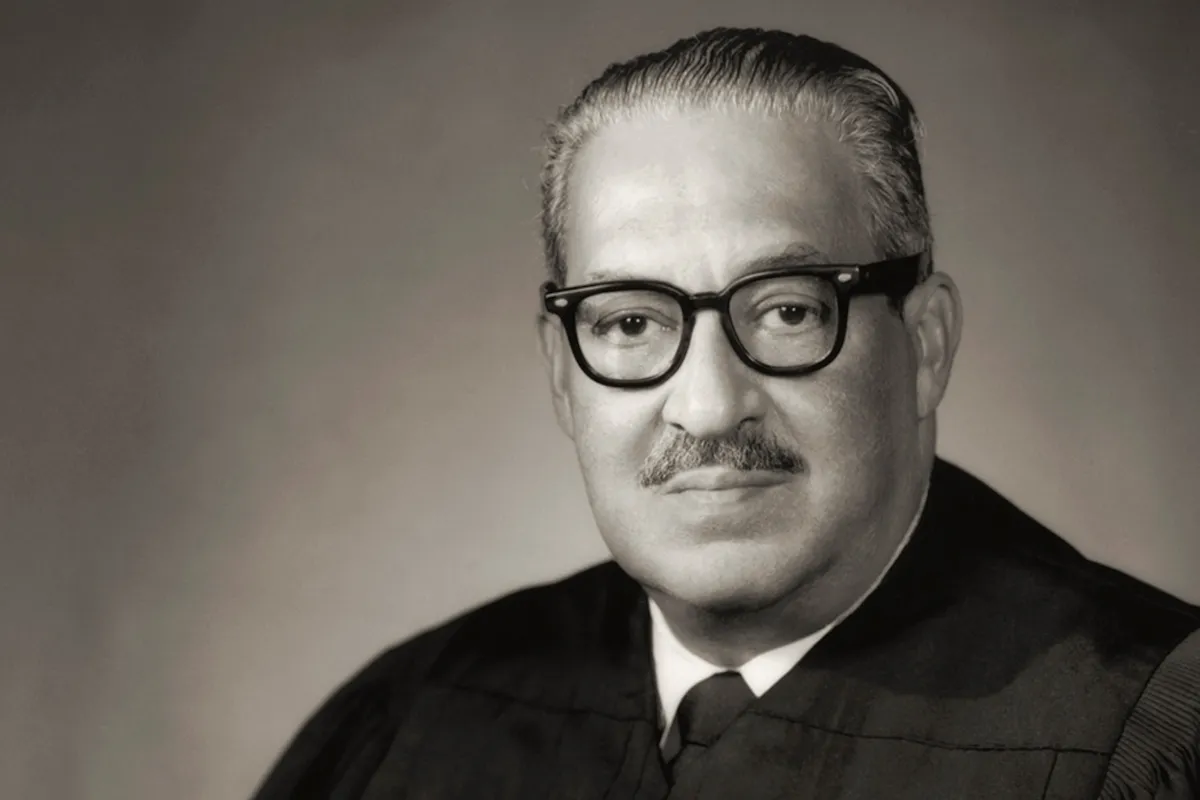 Photo: Thurgood Marshall, via i.natgeofe.com
As a kid growing up in Baltimore in the 1910s and 1920s, Marshall was known less for his intellect than for his talent at getting into trouble. He was loud, funny, and constitutionally incapable of sitting still when something more interesting was happening elsewhere. His mother, Norma, was a schoolteacher who believed fiercely in education. His father, William, was a railroad porter who believed fiercely in arguing — and who dragged young Thurgood to the courthouse on weekends to watch trials the way other fathers took their sons to ball games.
What Thurgood absorbed from those courtroom visits was something he couldn't have named yet: the idea that words, arranged carefully, had the power to change what was real.
But that was later. First, there was the hallway.
Punished Into Purpose
At Colored High and Training School in Baltimore — later renamed Frederick Douglass High School — Marshall was a regular presence outside the principal's office. The punishment of choice for students who disrupted class was to go sit in the hallway and memorize sections of the United States Constitution until they could recite them back.
Marshall spent enough time in that hallway that, by the time he graduated, he had the whole thing committed to memory.
Years later, he would describe this with the kind of grin that suggested he knew exactly how the story sounded. A disciplinary measure designed to bore a mischievous teenager into compliance had accidentally handed him the foundational text of his life's work. If there's a more perfectly ironic origin story in American history, it hasn't surfaced yet.
He graduated from high school in 1925 and enrolled at Lincoln University in Pennsylvania, one of the country's oldest historically Black universities. There, he continued his career as a spirited social presence — he pledged a fraternity, got suspended briefly for hazing, and ran with a crowd that included a young poet named Langston Hughes. He also started to get serious.
The Door That Shouldn't Have Been Closed
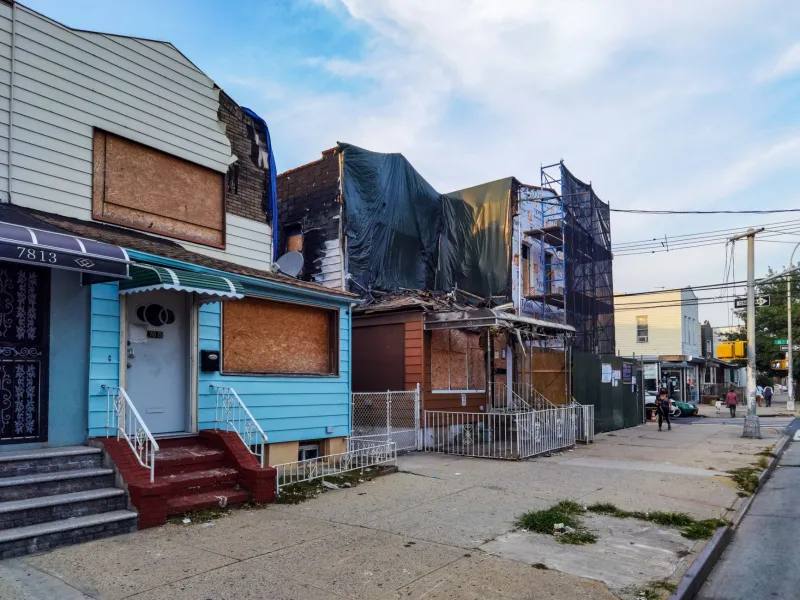
Marshall wanted to go to law school. The University of Maryland School of Law was the closest one to his home. The University of Maryland School of Law did not admit Black students.
This rejection, which the school made with routine indifference, turned out to be one of the more consequential administrative decisions in American legal history. Marshall enrolled instead at Howard University School of Law in Washington, D.C., where he came under the influence of a man who would reshape everything.
Charles Hamilton Houston was Howard's vice dean, and he was operating on a specific and radical theory: that the Constitution, read honestly, was an instrument of liberation — and that the segregated South had been systematically misreading it for decades. Houston was training lawyers not just to practice law but to dismantle a system. He called them "social engineers." He worked his students at a pace that bordered on punishing.
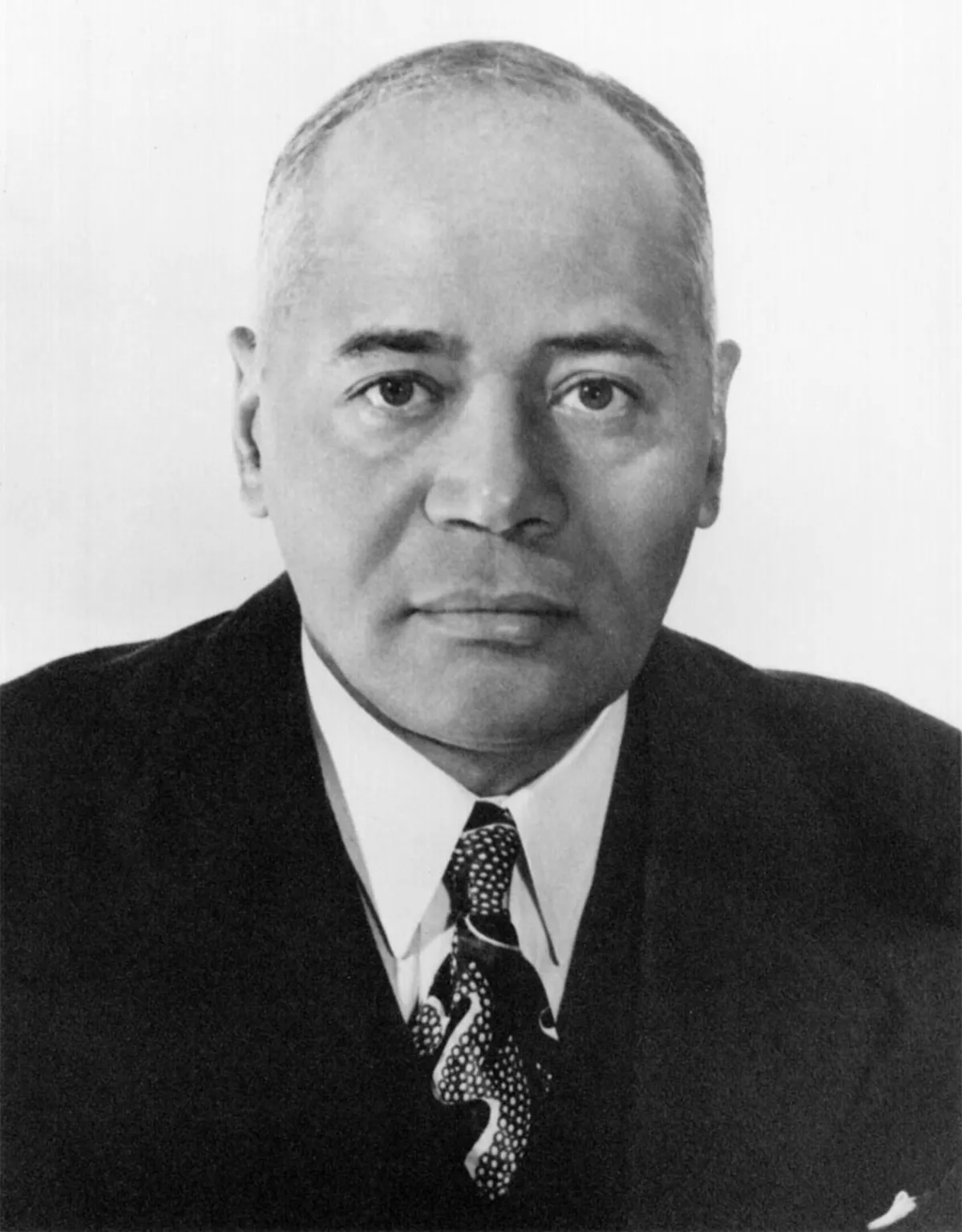 Photo: Charles Hamilton Houston, via news.harvard.edu
Marshall thrived. He graduated first in his class in 1933.
Building the Case, City by City
For the first several years of his career, Marshall did the grinding, unglamorous work that legal revolutions actually require. He traveled the South for the NAACP — often in genuine physical danger — taking on cases that established precedents one careful ruling at a time. He challenged unequal teacher salaries in Maryland. He fought discriminatory jury selection in courtrooms where the judges were openly hostile and the clients were terrified.
And then, in 1935, he took on something personal.
The University of Maryland School of Law — the one that had rejected him — had also rejected a young Black man named Donald Murray. Marshall argued the case. He won. Murray was admitted. Marshall later said there was a particular satisfaction in that one.
Throughout the 1940s, he kept building. The NAACP Legal Defense Fund, which he directed, became a kind of architectural firm for constitutional arguments — each case laying a beam that the next one would build on. Marshall won 29 of the 32 cases he argued before the Supreme Court. That record has never been matched.
The Room Where It Happened
On December 9, 1952, and again on December 8, 1953, Thurgood Marshall stood before the United States Supreme Court and argued Brown v. Board of Education — the consolidated challenge to public school segregation that would, when the decision came down on May 17, 1954, overturn Plessy v. Ferguson and begin the legal dismantling of Jim Crow.
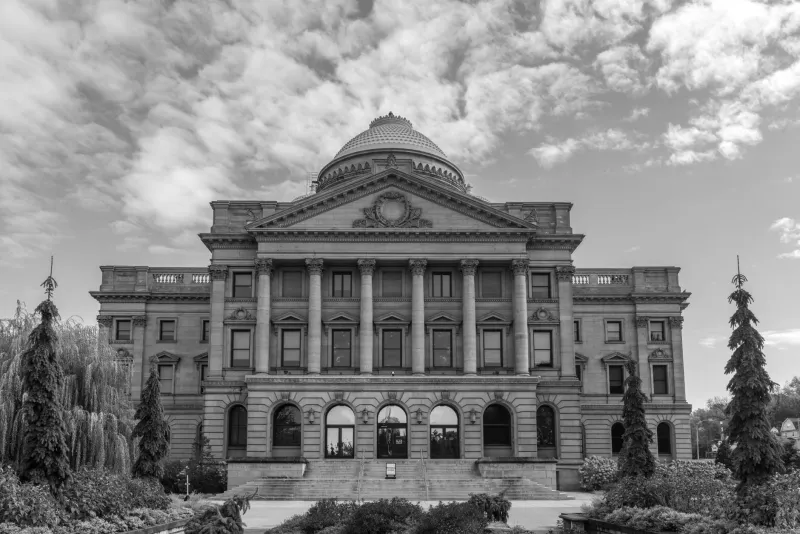
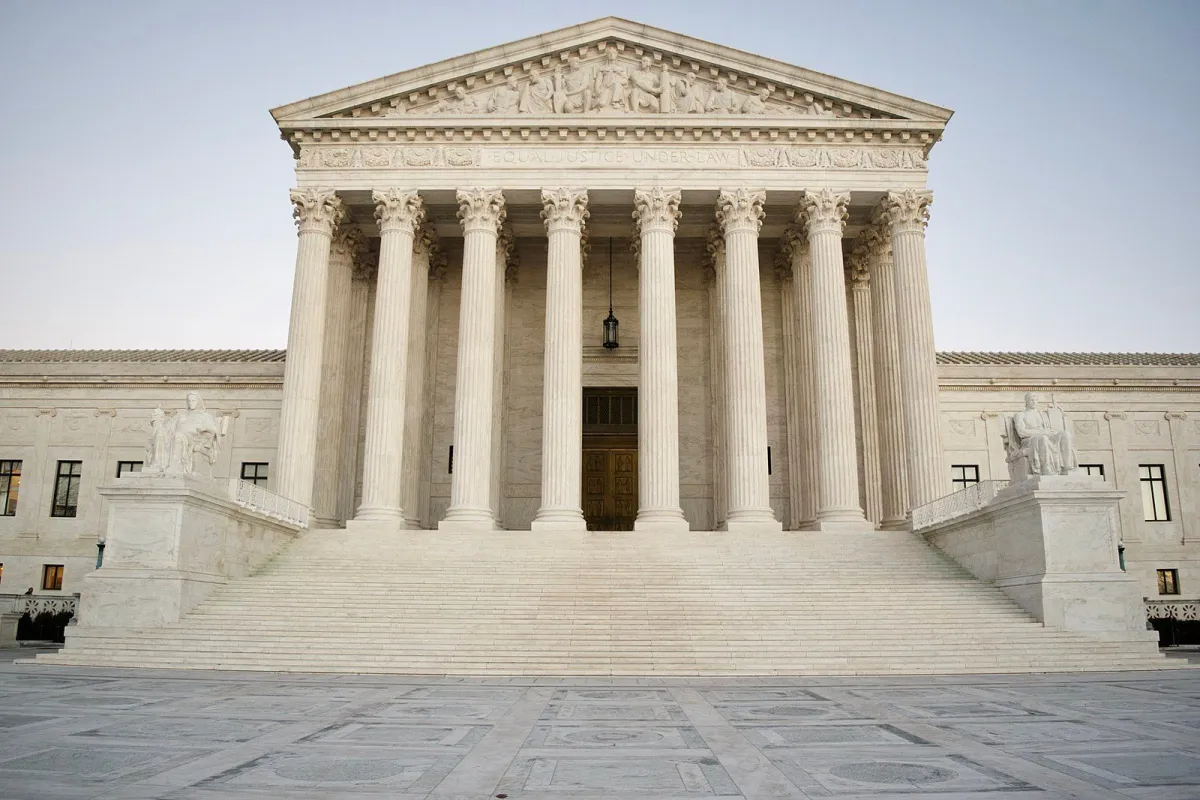 Photo: United States Supreme Court, via www.scotusblog.com
The argument he made wasn't simply that segregation was cruel, though it was. It was that segregation violated the Constitution — the same document he had memorized in a school hallway in Baltimore as punishment for being too loud in class.
The Court agreed, unanimously.
Marshall went on to serve as a federal appeals court judge, then as U.S. Solicitor General, then — in 1967 — as the first Black Justice of the United States Supreme Court, appointed by President Lyndon B. Johnson. He served for 24 years, writing opinions that shaped American law on everything from the death penalty to privacy rights to the limits of government power.
What the Hallway Made
There's a version of Thurgood Marshall's story that presents him as a singular genius who arrived fully formed, destined for greatness. That version is both more flattering and less interesting than the truth.
The truth is that he was a funny, restless, difficult kid who got into trouble and got sent to a hallway and came out knowing something most people didn't. The truth is that a racist admissions policy at a law school redirected him to a teacher who changed his entire understanding of what the law could do. The truth is that he spent years in dangerous places doing invisible work before the world knew his name.
The obstacles weren't incidental to his story. They were the story. Every door that closed pushed him toward a better one. Every humiliation sharpened his argument. The Constitution that had been used for generations to justify the exclusion of people who looked like him became, in his hands, the tool that began tearing that system apart.
He didn't find his purpose in a moment of inspiration. He found it in a school hallway, sitting with a document he'd been assigned to memorize as a form of punishment.
Some punishments don't work the way they're supposed to.