The World Stopped Counting. They Kept Going.

Introduction: The Myth of the Early Start
America loves a young genius. The college dropout who builds an empire at twenty-two. The teenage athlete who turns pro before she can vote. The wunderkind whose TED Talk goes viral at twenty-five. We have built an entire cultural mythology around the idea that greatness announces itself early — and that if it hasn't shown up by a certain age, it probably isn't coming.
That mythology has buried a lot of remarkable stories.
What follows are seven people who found their greatest work after the age when most of us assume the story is already written. Each of them faced a specific rejection, a particular closed door, a moment when the world communicated clearly that their time had passed. Each of them ignored it.
1. Anna Mary Robertson Moses — Brush in Hand at 78
For most of her life, Anna Moses was a farmer's wife in upstate New York who liked to embroider. She was good at it — detailed, patient work that suited her temperament. But in her late seventies, her hands developed arthritis severe enough that holding an embroidery needle became painful.
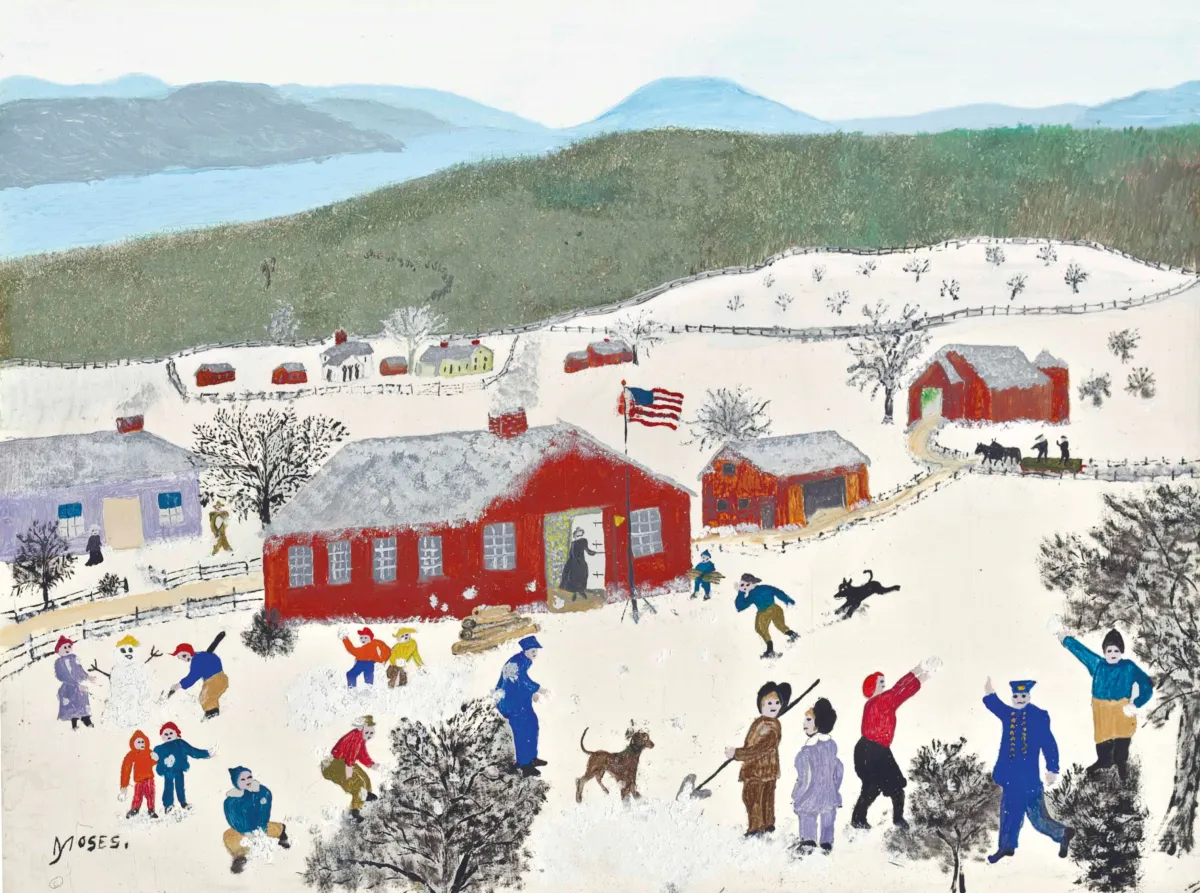 Photo: Anna Mary Robertson Moses, via www.christies.com
So she picked up a paintbrush instead. It was easier on her joints.
She was seventy-eight years old. She had no formal training. She painted scenes from rural American life — sugaring season, the old farmhouse, neighbors gathering in the snow — in a flat, vivid, folk-art style that felt both naive and deeply observant.
A New York art collector named Louis Caldor spotted her paintings in a drugstore window in 1938, priced between three and five dollars. He bought them all and brought them to a gallery in Manhattan. Within a year, "Grandma Moses" was a sensation. Her work eventually sold for millions. She was featured on the cover of Time magazine at 101.
The arthritis that ended one creative life accidentally started another. She painted until she was 101 years old.
2. Harland Sanders — Franchising at 62, After Social Security Said No
Harland Sanders spent decades running a roadside restaurant in Corbin, Kentucky, where he developed a method for pressure-cooking chicken with a specific blend of herbs and spices. He was good at it. People drove out of their way to eat there.
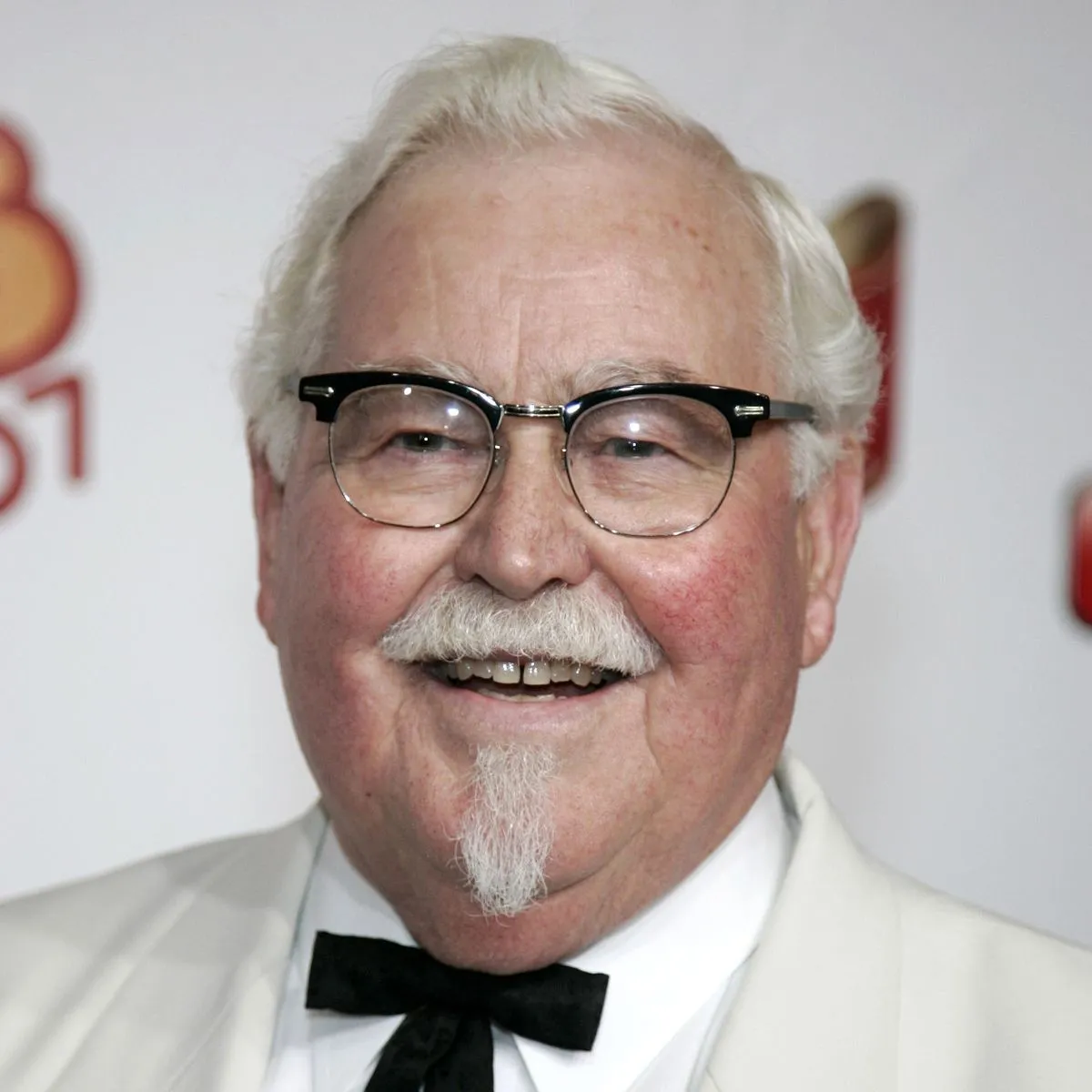 Photo: Harland Sanders, via i2-prod.mirror.co.uk
Then Interstate 75 was built along a different route, bypassing his town entirely. Traffic dried up. The restaurant failed. Sanders was in his early sixties, broke, and receiving his first Social Security check — $105 a month.
He looked at that check and decided it was not enough to retire on.
He loaded his pressure cooker into his car and started driving around the country, offering to cook his chicken for restaurant owners in exchange for a small royalty on every piece sold. He was rejected over a thousand times. He kept driving. By 1964, when he sold the Kentucky Fried Chicken franchise system, there were over 600 locations.
He was sixty-two when he started franchising. The white suit and the string tie came later — a persona built from scratch, like everything else.
3. Laura Ingalls Wilder — First Book Published at 65
Laura Ingalls Wilder spent most of her adult life as a farm wife in Missouri, writing columns for a local agricultural paper and helping her husband Almanzo manage land that seemed to fight them at every turn. She had tried to write about her frontier childhood before, in a manuscript that her daughter Rose helped her reshape and refine across years of correspondence.
Her first published book, Little House in the Big Woods, came out in 1932. She was sixty-five years old.
She went on to publish seven more books in the series. The books became classics of American children's literature, eventually spawning a television series that ran for nine years. Wilder wrote the last book in the series at seventy-six.
She had been writing in one form or another her whole life. The world just wasn't paying attention until she was old enough to have grandchildren.
4. Harry Bernstein — Published His Memoir at 96
Harry Bernstein spent his entire adult life trying to be a writer. He wrote novels. He submitted them. They were rejected. He worked as an editor at a trade magazine for decades, writing on the side, never breaking through.
His wife Ruby died in 2002, after sixty-seven years of marriage. Bernstein was ninety-three years old and devastated in a way that he said made it hard to see the point of anything.
He started writing about his childhood in a small Jewish neighborhood in England, about the invisible line between the Jewish side of the street and the Christian side, about his mother's ferocious will and his father's failures. He wrote it to stay connected to Ruby, who had been his reader and his anchor.
The Invisible Wall was published in 2007. He was ninety-six. It became an international bestseller. He published two more memoirs before his death at 101.
He said the best years of his life were the ones after ninety. He meant it.
5. Fauja Singh — Marathon Runner at 89
Fauja Singh was a farmer in India who came to England in 1992 at age eighty-one, after the death of his son. He spoke no English. He was grieving and, by his own description, had no particular reason to get out of bed.
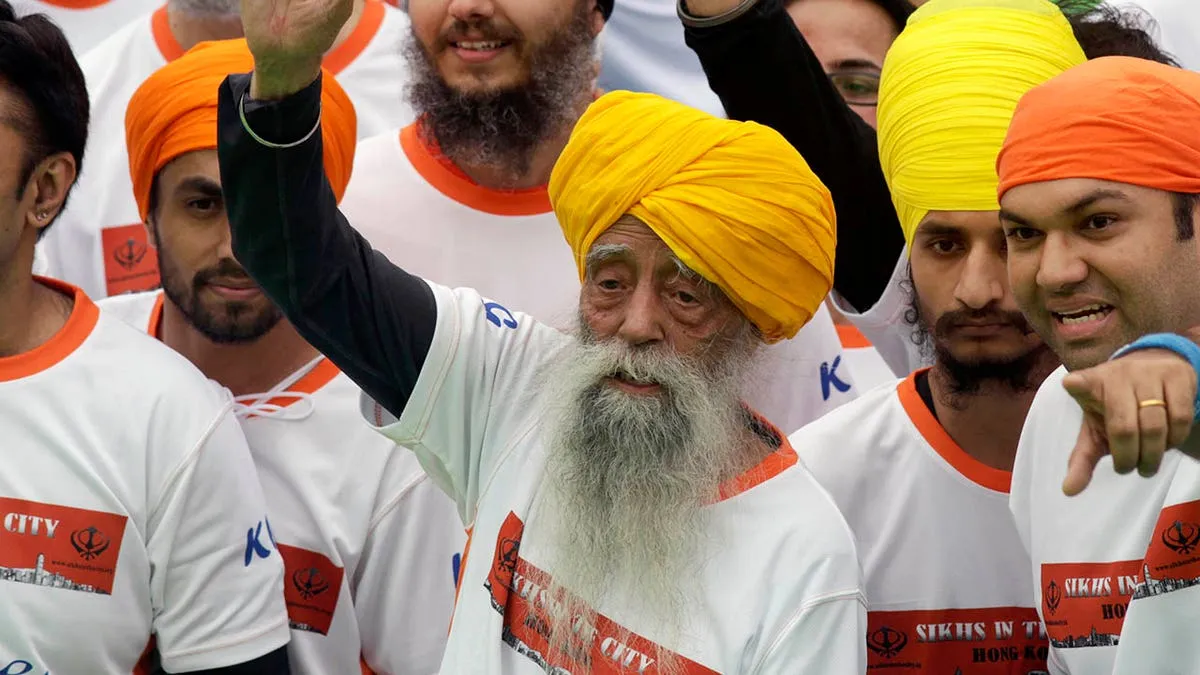 Photo: Fauja Singh, via a57.foxnews.com
A neighbor suggested he try running. He was eighty-nine years old when he ran his first marathon.
He completed the London Marathon in 2000, at ninety, in just over six hours. He went on to run eight more marathons and became the first centenarian to complete a 26.2-mile race, finishing the Toronto Waterfront Marathon in 2011 at age 100. He was featured in a Adidas campaign and appeared on a Royal Mail stamp.
He credited the running with giving him a reason to eat, sleep, and wake up in the morning. Grief had nearly stopped him. Motion kept him going.
6. Vera Wang — First Dress Designed at 40
Vera Wang spent her twenties as a competitive figure skater who didn't make the Olympic team, then pivoted to fashion journalism, rising to senior editor at Vogue by her thirties. When she was passed over for the editor-in-chief position she'd worked toward for years, she left.
She was forty years old when she designed her first wedding dress — her own, because she couldn't find one she liked.
She opened her first bridal boutique in 1990. Within a decade, her name was synonymous with high-fashion bridal design. She has since expanded into ready-to-wear, fragrance, jewelry, and home goods, building a brand valued in the hundreds of millions.
The Olympic dream ended. The Vogue door closed. The dress she made for herself became the foundation of an empire.
7. Stan Lee — Created His Best Work at 39
By the time Stan Lee was nearly forty, he had spent almost two decades writing forgettable comic book filler — westerns, romance stories, whatever the publisher needed. He was tired of it. He was close to quitting.
His wife Joan told him that if he was going to leave anyway, he might as well write something he actually wanted to write first.
In 1961, Lee co-created the Fantastic Four. Then the Hulk. Then Spider-Man, Thor, Iron Man, the X-Men. In a four-year burst of creativity that began when he was thirty-nine, he built the architecture of the Marvel universe — characters that would eventually anchor one of the most profitable entertainment franchises in history.
He had spent two decades writing things nobody remembered. Then he wrote things nobody forgot.
What They Have in Common
None of these people were waiting for the right moment. Most of them were pushed — by grief, by failure, by a closed door or a dried-up road or an arthritis diagnosis that made the old tools too painful to use.
The world has a way of communicating, clearly and repeatedly, that certain chapters are over. These seven people received that message and found it unconvincing.
That's not a lesson in positive thinking. It's something more stubborn than that. It's the refusal to let someone else's timeline become your own — even when that someone else is the entire culture you live inside.
Starting over is sometimes the same thing as starting right.