Before the Robe, There Was the Bronx: The Years Nobody Talks About
The Words Were Everywhere If You Knew to Look
The apartment wasn't big. The Bronxdale Houses, a public housing project in the South Bronx, weren't designed for comfort — they were designed for density. Sonia Sotomayor grew up in those buildings in the 1950s and early 1960s, in a household where Spanish came first and English arrived slowly, through the television, through neighbors, through whatever printed material happened to be within reach.
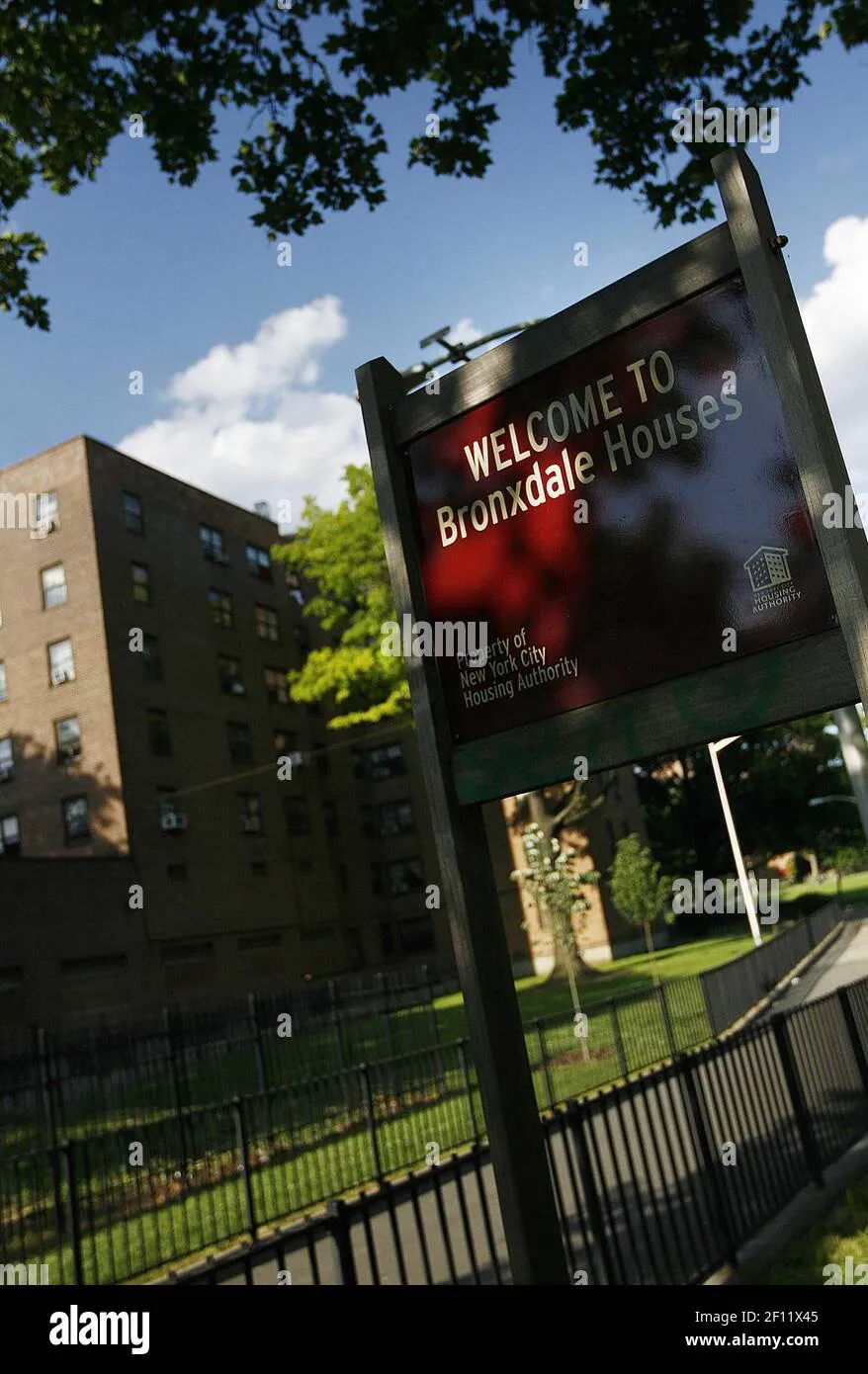 Photo: Bronxdale Houses, via c8.alamy.com
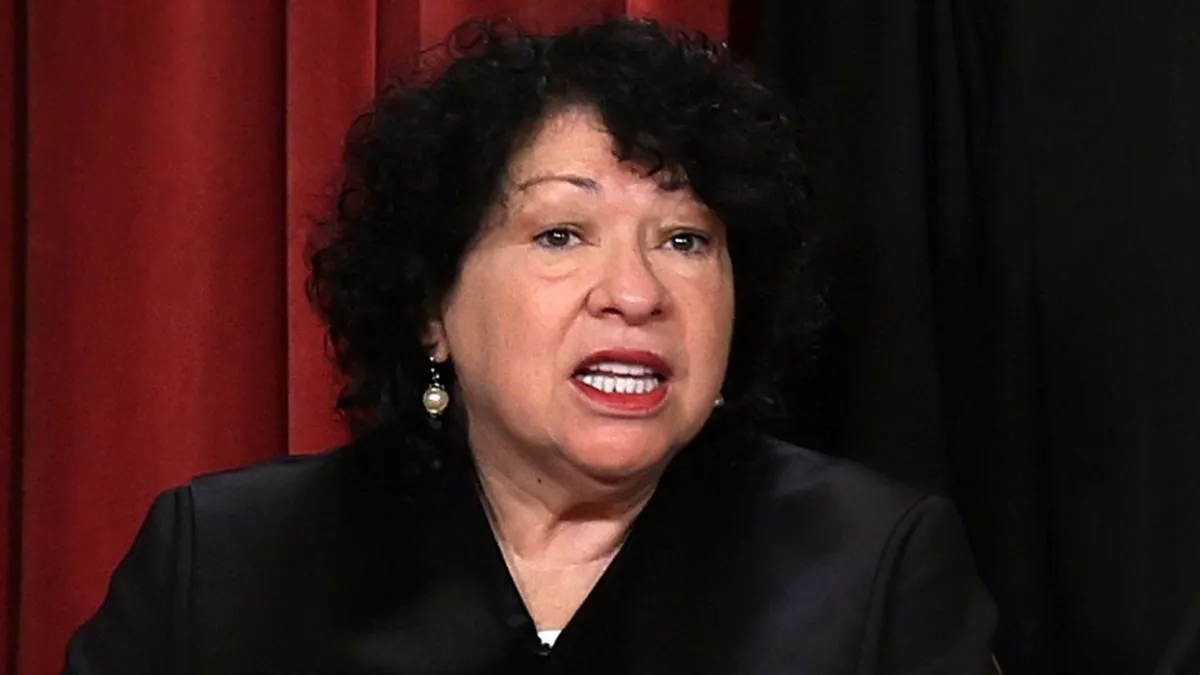 Photo: Sonia Sotomayor, via www.advocate.com
Cereal boxes. Advertisements. Whatever the family brought home. Sonia read it all.
This is not a small detail. It tells you something essential about how she was wired: not waiting for the right tools, not stalling until conditions improved, just using whatever was in front of her. A cereal box is not a great reading primer. It doesn't matter. You read it anyway. You move on to the next thing.
Her parents were Puerto Rican. Her father, Juan, worked in a factory and had a third-grade education. Her mother, Celina, was a nurse's aide who would later push herself through nursing school while raising two children. The household was loving and complicated and not always stable. Juan Sotomayor struggled with alcoholism, and the family lived with a particular kind of quiet tension that children absorb without being able to name.
Sonia was diagnosed with juvenile diabetes at eight years old. She learned to give herself insulin injections. She was eight.
The Year Everything Got Harder
In 1963, when Sonia was nine, her father died. He was forty-two.
The family accounts describe a household that went very quiet after that. Celina Sotomayor threw herself into work and study. Sonia and her brother Juan Jr. were largely left to navigate their grief without a lot of ceremony. There wasn't time for ceremony. There was school. There was survival.
What Sonia did in the years immediately following her father's death says everything about the person she was becoming. She read. She studied. She watched Perry Mason on television — obsessively, by her own account — and decided she wanted to be a judge. Not a lawyer. A judge. She was ten years old and she was already skipping a step.
This is the part that tends to get lost in the official biography, flattened into a tidy origin story. The reality was messier and more human. She was a grieving kid with a chronic illness in an underfunded school system, watching a TV show and deciding that the person with the most authority in the room was the one she wanted to become. There was something both innocent and ferociously strategic about it.
The Teachers Who Looked at Her Sideways
Sotomayor has spoken publicly about the guidance counselors and teachers who questioned whether her ambitions were realistic. The specific flavor of that doubt is worth sitting with for a moment.
It wasn't always overt. Sometimes it was the pause before a response. The slight recalibration in a teacher's face when a Brown girl from the South Bronx said she wanted to go to an Ivy League school. The gentle suggestions that she consider something more attainable. The well-meaning advice that functioned as a ceiling.
She didn't ignore it. She heard it. She has said so. But she developed a habit that would serve her for the rest of her life: she treated doubt as information about the person expressing it, not as information about herself.
She graduated as valedictorian from Cardinal Spellman High School. She applied to Princeton. She got in.
Arriving Somewhere She Didn't Quite Fit
Princeton in the early 1970s was still adjusting to the idea of women on campus — coeducation had only begun in 1969 — and the presence of students of color remained a novelty in ways both spoken and unspoken. Sotomayor arrived and felt, by her own description, like an outsider who had wandered into someone else's party.
Her written English wasn't where it needed to be. She knew it. She spent her first years at Princeton working in a way that most of her classmates, arriving from prep schools with polished skills and family connections, didn't have to. She went to professors during office hours. She read grammar books voluntarily. She did the unglamorous, invisible remedial work that high-achieving people rarely admit to because it doesn't fit the narrative of effortless brilliance.
She graduated summa cum laude. Then she went to Yale Law School.
At Yale she became an editor of the law journal. She argued her case before a faculty panel when she believed a recruiting firm was discriminating against minority students — filed a formal complaint, put her name on it, and won. She was twenty-three.
The Invisible Architecture of Getting There
Here's what the headlines about Sonia Sotomayor almost never capture: the texture of the years before. The specific weight of being told — not cruelly, sometimes even kindly — that you should want less. The discipline required to study grammar books when your classmates are socializing. The private recalibration that happens when you lose a parent at nine and decide, somewhere in the middle of your grief, that you are still going to become the person in charge of the room.
None of that is glamorous. None of it photographs well. It doesn't fit on a commemorative poster.
But it is the actual story. The robe and the title and the historic confirmation in 2009 — those are the visible part. The invisible part is a decade and a half of daily decisions made by a girl and then a young woman who had every reason to believe the world wasn't particularly organized in her favor, and who showed up anyway.
She learned English from cereal boxes. She gave herself insulin shots at eight. She read grammar books in college because nobody had taught her what the prep school kids already knew.
And then she became the most powerful judge in the country.
Endurance is not a dramatic word. It doesn't trend. But it is, more often than we admit, the actual engine of extraordinary lives.