They Came Back: Five Americans Who Were Written Off — Then Rewrote Everything
Photo: Associated First National, Public domain, via Wikimedia Commons
Coming Home Different
There's a particular kind of American story that doesn't get told enough. Not the one where someone escapes their hometown and never looks back. Not the triumphant return of the already-famous. The one where a person comes back to the exact place that dismissed them — quietly, without fanfare — and changes it from the inside out.
These five people did exactly that. Different eras, different regions, different circumstances. But the same essential arc: written off early, shaped by the leaving, transformed by the return.
1. The Sharecropper's Grandson Who Rebuilt a Mill Town Nobody Wanted
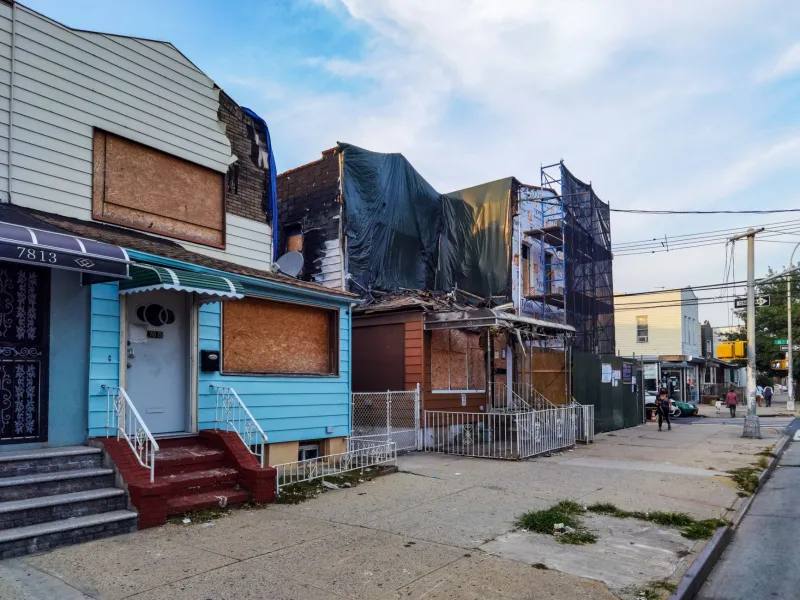
In the rural Carolinas, the death of a textile mill isn't just an economic event. It's the end of a way of life. When the last loom went silent in one small Piedmont community in the late 1980s, the town lost its reason to exist almost overnight. Families left. Storefronts emptied. The kind of quiet desperation settled in that doesn't make the news because there's nobody left to report it.
Marcus had grown up three miles from that mill. His grandfather had sharecropped land owned by the same family that later built the mill. Marcus himself had been suspended from the local high school twice, written off by a guidance counselor who told him, with clinical directness, that he wasn't "college material."
He left at seventeen. Spent years in Atlanta doing construction work, eventually taught himself to read architectural drawings on job sites, and slowly built a career in community development that took him from project management to urban planning without a single formal degree in either.
When he came back to the Piedmont community in his mid-forties, nobody expected much. What he brought with him was a decade of experience in adaptive reuse — converting dead industrial space into livable, economically functional community anchors. The old mill became a mixed-use development: affordable housing, a small manufacturing cooperative, a community health clinic. The town didn't boom. But it breathed again.
The guidance counselor had retired by then. Marcus sent her a note anyway. Gracious, reportedly. Short.
2. The Juvenile Delinquent Who Redesigned the Block He Used to Run
DeAndre spent his teenage years in a mid-size Ohio city that had been quietly hollowing out since the 1970s. He knew every alley in his neighborhood — not because he was an urban planner, but because he needed to know them. By sixteen, he had two juvenile charges and a reputation that preceded him into every room he entered.
A judge gave him a choice that changed everything: a youth arts program instead of detention. He showed up expecting to hate it. Instead, he discovered drafting. The precision of it. The way a line on paper could become a wall, a doorway, a space where something human could happen.
He eventually earned a scholarship to an architecture program — the only student in his cohort who had ever been inside a juvenile facility. He graduated, worked in Columbus and later Chicago, and built a quiet reputation for designing public spaces in communities that larger firms ignored because the budgets were too small and the prestige too low.
At forty-two, he returned to his Ohio city with a proposal for his own old neighborhood: a redesign of a six-block area that prioritized pedestrian movement, community gathering space, and the kind of environmental design that reduces the conditions that produce crime without pretending those conditions are inevitable.
The city council approved it after three attempts. The neighborhood looks different now. So does the city's relationship with the idea that design is something that happens to poor communities rather than for them.
3. The Girl Who Left the Farm and Came Back With a Library
In a small agricultural community in the Mississippi Delta, the nearest public library was forty miles away in the 1960s. For a girl who had taught herself to read at age four and was consuming books faster than her family could source them, that distance felt like a verdict.
 Photo: Mississippi Delta, via images.fineartamerica.com
She left for Chicago at nineteen. Worked in publishing. Spent thirty years building a career in literacy education that took her to conferences, classrooms, and community programs across the country. She was successful, respected, and living well.
But the Delta pulled at her.
At fifty-eight, she came back. Not with money — she had modest savings and a small foundation grant. But with thirty years of knowledge about what makes literacy programs actually work and a stubbornness that people who knew her as a child would have recognized immediately.
The community library she built — in a converted storefront, staffed largely by volunteers she trained herself — has since served thousands of children. It has a waiting list for its after-school program. It has produced, by the last count anyone bothered to make, fourteen young people who have gone on to higher education from a community where that outcome was previously considered exceptional.
She runs it from a desk in the back. Still reads faster than most people she knows.
4. The Veteran Who Came Home Twice
The first time Raymond came home to his small Texas border town, it was in pieces. Two tours, a traumatic brain injury, and a level of PTSD that the VA system of the early 2000s was not equipped to address. He drank. He disappeared from his family for stretches. He was, by his own accounting, not a person anyone would have looked at and predicted a second act.
The second time he came home, he was sober, trained as a peer support specialist, and carrying a very specific idea: that the veterans in communities like his — rural, Latino, Spanish-speaking, geographically isolated from major VA centers — were falling through every gap in the mental health system simultaneously.
He built a peer support network from scratch. Drove hundreds of miles a month to reach veterans who wouldn't come to an office but would talk to another veteran who showed up at their door. Trained other veterans to do the same. Pushed the local county health department to fund the program after three years of operating it on donations and his own time.
The network now covers four counties. Raymond doesn't describe what he does as heroic. He describes it as the only thing that made sense once he figured out what he was supposed to do with what had happened to him.
5. The Numbers Kid Who Came Back and Saved the Schools
Everyone in his small Appalachian Kentucky town knew that Tommy was good at math. What they couldn't agree on was whether that was useful. He grew up in a family that had worked the same coal-adjacent economy for three generations. College was theoretical. Leaving was practical.
He left. Ended up in finance in Louisville, then Cincinnati. Made money. Made more money. Became the kind of person who got invited to things.
But the town's school district — already underfunded, already struggling — hit a crisis point when state funding formulas shifted and left a gap that the local tax base couldn't fill. Three schools were facing closure. The superintendent sent letters to anyone who had ever grown up in the district and made good.
Most people sent small checks. Tommy came back in person.
What he found was a funding structure that had calcified into inefficiency over decades — not from corruption, but from the kind of institutional inertia that happens when nobody with financial expertise has looked at the books in a generation. He spent eight months working with the district, pro bono, restructuring their financial operations, identifying grant opportunities they hadn't known to apply for, and renegotiating vendor contracts that had been auto-renewing at above-market rates for years.
The three schools stayed open. Tommy went back to Cincinnati. He comes back twice a year now, still working with the district on a volunteer basis.
He never made a big deal of it. The town did.
What the Homecoming Means
These five stories aren't identical. The circumstances, the obstacles, the timelines — all different. But there's a through line that connects them, and it's not just the geography of return.
Each of these people was shaped by leaving. The distance gave them tools, perspective, and the particular clarity that comes from seeing your hometown from the outside. But the impact — the actual, lasting, measurable change — only happened when they brought those tools back to the place that had once told them not to bother.
America loves the story of escape. The person who gets out, goes somewhere bigger, makes something of themselves. We tell that story constantly.
But the story of return — of someone choosing to apply everything they've built in the place that expected the least from them — that one hits differently. Because it's not just about personal success. It's about what success is actually for.