Grease, Grit, and a Rented Room: The Chicago Dropout Who Quietly Saved the World's Food Supply
The Smell of Ambition
If you grew up near the Union Stock Yards in early twentieth-century Chicago, you didn't need a biology lesson to understand decay. You could smell it. You could feel it in the thick summer air that settled over the South Side like a wet blanket. For the children of the men who worked those yards — men who came home with blood on their boots and not much else — the future had a pretty predictable shape. You worked the floor. You kept your head down. You didn't ask too many questions.
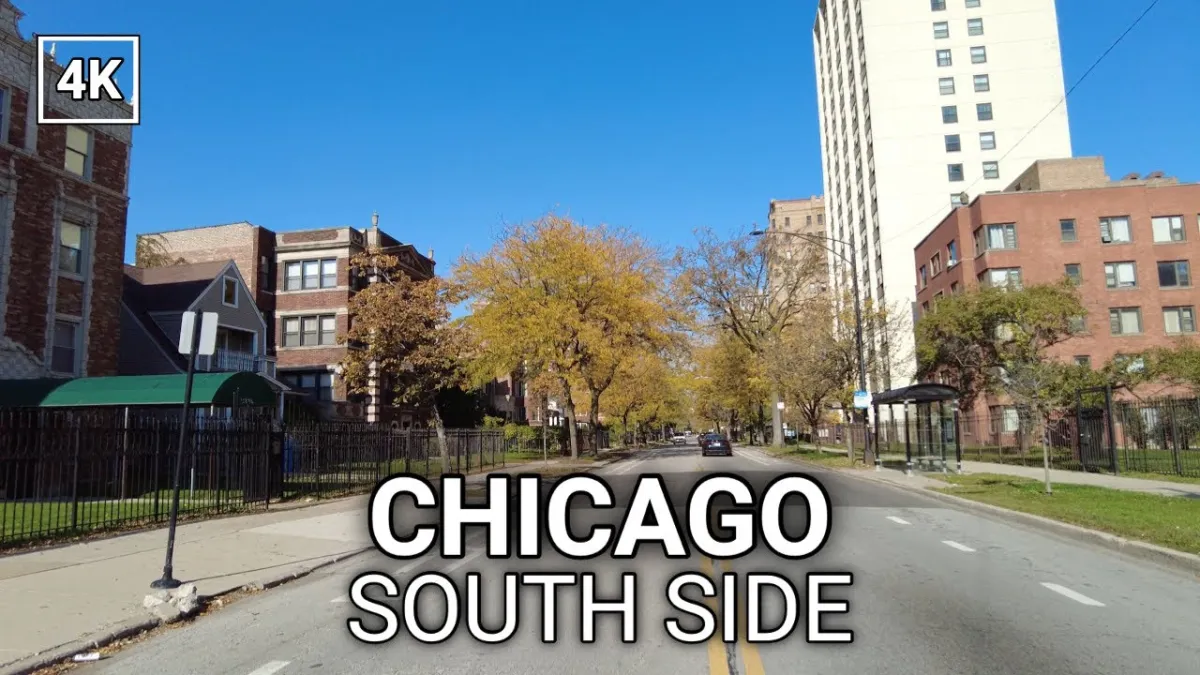 Photo: South Side, via i.ytimg.com
So when a butcher's son from that world started asking questions about why food spoiled — not just accepting that it did, but demanding to know the chemistry underneath the rot — nobody took it seriously. Not his teachers. Not the universities he wrote letters to. Not the scientific establishment that had already decided where knowledge was supposed to come from.
They were wrong. Spectacularly, historically wrong.
Every Door Closed
The rejection letters came fast and without apology. Too young. Insufficient academic background. No formal laboratory experience. The language changed from letter to letter, but the message was identical: this is not for you.
For most people, that stack of envelopes would have been the end of the story. For this particular dropout, it was more like a starting gun.
He pooled together what little money existed in his household — supplemented by odd jobs, early mornings, and the kind of stubborn frugality that meatpacking neighborhoods bred into people — and rented a small room above a hardware store. He bought secondhand chemistry textbooks. He wrote to professors whose papers he'd tracked down in public library periodicals, asking questions they mostly didn't bother answering. He ran experiments on his own kitchen table before he had anything that resembled a proper workspace.
What he lacked in pedigree, he made up for in an almost irrational willingness to start over when something didn't work.
The Problem Nobody Wanted to Solve
Food preservation in the early twentieth century was a patchwork of guesswork and tradition. Salt, smoke, ice, and prayer. The science existed — Louis Pasteur had laid groundwork decades earlier — but the practical application of that science to mass food supply was still wildly inconsistent. People got sick. Entire harvests rotted in transit. In poorer communities, food spoilage wasn't an inconvenience; it was a genuine public health catastrophe.
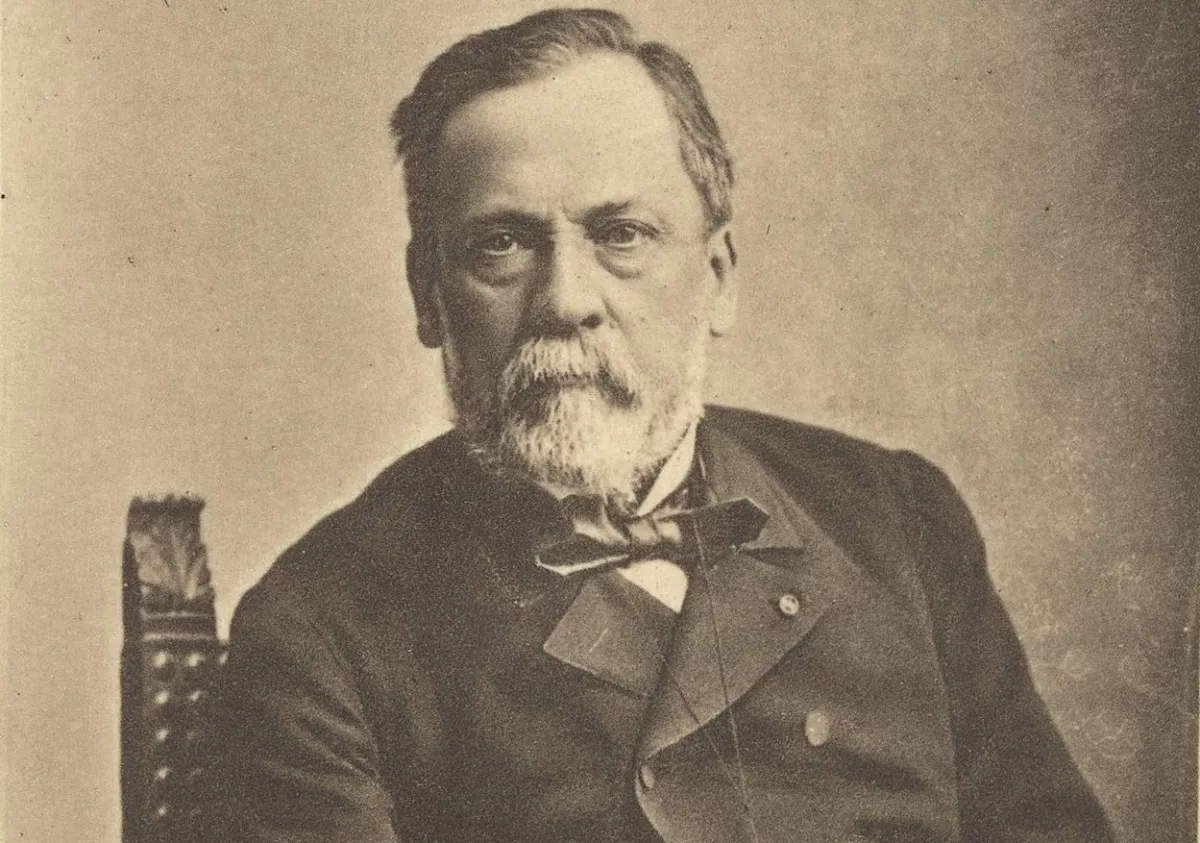 Photo: Louis Pasteur, via www.sciencehistory.org
The credentialed experts of the era weren't ignoring this problem. They were working on it — inside university laboratories, inside institutional frameworks, inside the comfortable grooves of established methodology. And that, as it turned out, was precisely the limitation.
Academic training teaches you to see problems through the lens of what's already been tried. It teaches rigor, which is valuable. But it also teaches a kind of intellectual conservatism — an instinct to build incrementally on what already exists rather than to blow the whole framework open and start fresh.
The butcher's son had no such instinct. He had no framework to protect.
What Outsiders See
Working without institutional oversight — and without the social pressure to conform to existing theory — he began approaching food chemistry from angles that trained scientists had essentially ruled out as too simple, too obvious, or too far outside accepted practice.
He was obsessed with the conditions under which spoilage occurred, not just the spoilage itself. He studied temperature, moisture, atmospheric composition, and the interaction between packaging materials and the foods they contained. He was particularly interested in what happened at the molecular level when preservation methods failed — not just that they failed, but where in the process the breakdown began.
His findings, assembled painstakingly over years in that rented room and later in a small independent laboratory he scraped together funding for, pointed toward preservation techniques that mainstream food science had either overlooked or dismissed as impractical. He developed methods for extending shelf life in ways that didn't rely on heavy salting or smoking — processes that compromised nutritional value and flavor — and began applying those methods to the kinds of staple foods that working-class and rural communities depended on most.
The scientific establishment, when they eventually noticed, responded with the particular hostility that institutions reserve for people who make them look like they've been wasting time.
Saving Lives From the Margins
The practical impact of his work didn't announce itself with a press conference or a university award ceremony. It showed up quietly, in the supply chains of food distribution networks, in the reduced spoilage rates of goods shipped to underserved communities, in the gradually improving nutrition statistics of populations that had previously faced seasonal food insecurity as a fact of life.
During the years when large-scale food distribution was expanding across the United States — and later when wartime supply chains demanded preservation solutions that could survive long distances and difficult conditions — the techniques he had developed in obscurity became essential infrastructure. Not always with attribution. Not always with acknowledgment.
That was the particular indignity of being an outsider in American science during that era. Your ideas could be borrowed freely, refined by people with the right degrees, published under the right institutional letterhead, and absorbed into the mainstream without anyone feeling obligated to trace the idea back to a dropout above a hardware store on the South Side of Chicago.
The Establishment Eventually Caught Up
Recognition, when it came, arrived late and grudgingly. A few researchers who had encountered his work early — and had the intellectual honesty to say so publicly — helped push his contributions into the record. But for most of his career, he operated in the way that many self-taught pioneers have had to operate in America: doing the work because the work mattered, not because anyone was keeping score.
What his story reveals, though, is something genuinely important about where breakthrough thinking comes from. The food science establishment of the early twentieth century was full of brilliant, well-trained people. They had resources, laboratories, and peer networks. What they didn't have was the freedom that comes from having nothing to lose and no reputation to protect.
The butcher's son from Chicago had both of those things in abundance.
The Lesson in the Margins
America has always had a complicated relationship with expertise. We celebrate the self-made genius in theory while quietly making it harder for self-made geniuses to actually exist in practice. The gatekeeping mechanisms of higher education, professional licensing, and institutional credentialing serve real purposes — but they also filter out a particular kind of thinker: the one who learns differently, who comes from the wrong neighborhood, who asks the questions that everyone else has already decided aren't worth asking.
Sometimes those thinkers go away quietly. Sometimes they find a rented room and a secondhand textbook and refuse to.
The world's food supply is a little more stable because one of them did exactly that.