Eight Square Feet and a World-Changing Idea: The Inventors Who Built America From the Wrong Side of the Lab Door

Photo by Photo by Steve Giampa on Unsplash on Unsplash
The Lab That Wasn't
The story of American invention has a mythology problem. In the official version, breakthroughs happen in gleaming facilities — well-funded, well-staffed, well-lit. Men in white coats peer into microscopes. Chalkboards overflow with equations. Progress is orderly, institutional, credentialed.
The actual story is messier and considerably more interesting.
Again and again, across more than a century of American technological history, the ideas that changed daily life did not come from the sanctioned spaces of innovation. They came from garages that smelled like motor oil, from basements where the ceiling was too low to stand up straight, from bathrooms where the only quiet time of the day happened at midnight. They came from people who were not supposed to be inventing anything, who had no particular right to change the world — and who did it anyway, largely because nobody told them they couldn't.
Here are seven of them.
1. The Garage Where the Personal Computer Was Born
The garage on Addison Avenue in Palo Alto is now a California Historical Landmark, which is a polite way of saying the state eventually acknowledged what happened there after the fact. In 1938, Bill Hewlett and Dave Packard set up shop in a rented space roughly the size of a modern walk-in closet and started tinkering with audio oscillators — devices that generate precise electronic tones.
They had a combined starting capital of $538. They had no corporate backing, no university affiliation in any formal sense, and no clear market for what they were making. What they had was the kind of focused, unglamorous work ethic that flourishes precisely because there are no investors to impress and no committee meetings to attend.
Walt Disney bought eight of their oscillators for the production of Fantasia. The company that grew from that garage — Hewlett-Packard — became the foundation stone of what the world now calls Silicon Valley. The garage itself became a symbol not because it was special, but because it was so completely ordinary. That was always the point.
2. The Basement Chemist Who Reinvented Clean
Before the modern detergent industry existed, laundry was a physical ordeal. Washing clothes meant hours of labor with products that were harsh, inconsistent, and frequently damaging to fabric. The science of surfactants — the compounds that make cleaning agents actually work — was largely the province of large chemical companies with research divisions that dwarfed most universities.
Victor Mills didn't work for one of those companies when he started his early experiments. He worked in a space that was, by any professional standard, laughably inadequate. But Mills — who would later, in a formal corporate role, also invent Pringles and help develop Pampers — understood something important: the best way to solve a cleaning problem is to get your hands dirty with it. His basement experiments on soap chemistry contributed to a body of practical knowledge about how everyday products could be reformulated from the ground up.
The lesson wasn't the specific compound. It was the method: work close to the problem, without the insulation of institutional assumptions, and you see things the people in the big labs miss.
3. The Bathroom Radio That Launched an Industry
Ernest Tubb didn't invent the transistor radio. But the chain of invention that put a radio in every American pocket ran through a remarkable number of unglamorous home workshops before it reached any corporate laboratory.
The transistor itself — the device that made portable electronics possible — was developed at Bell Labs, yes. But the people who figured out how to make it cheap, rugged, and manufacturable enough for mass consumer use were frequently working outside the formal research structure. Engineers who tinkered at home, who built prototypes in spare rooms, who filed patents from addresses that were plainly residential.
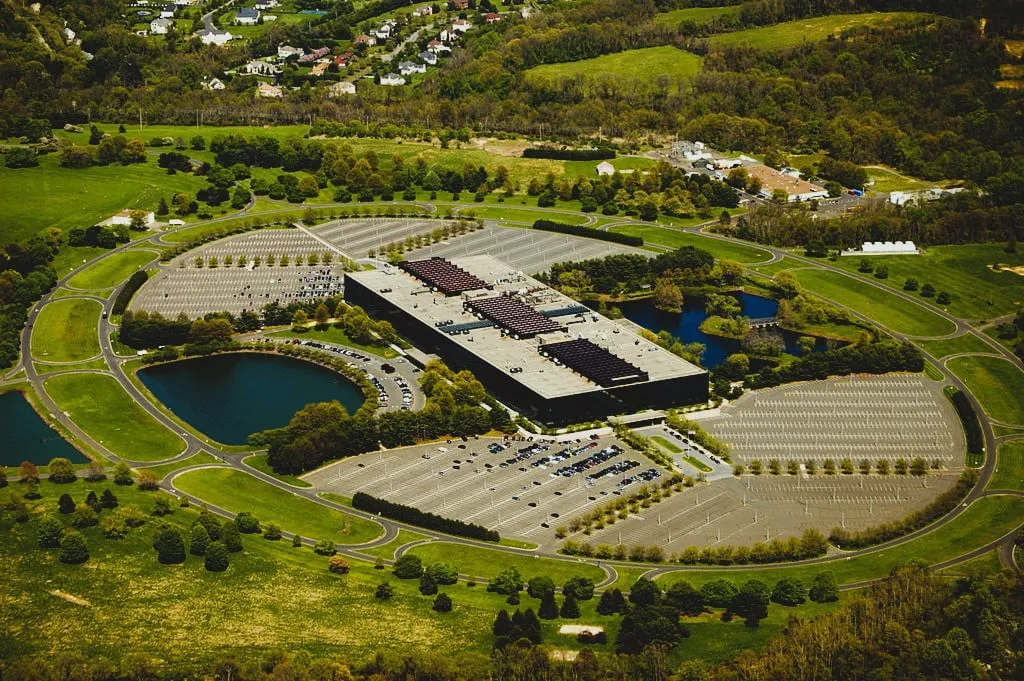 Photo: Bell Labs, via evolutionoftheprogress.com
The bathroom, specifically, became a recurring location in the folklore of electronics invention — because it was often the one room in a crowded household where a person could work undisturbed, and because the acoustics of a tiled room made it easy to test audio equipment. Across America, in the postwar decades, the sounds of the future were being worked out in spaces that smelled like soap.
4. The Garden Shed and the Super Soaker
Lonnie Johnson was a NASA engineer — trained, credentialed, legitimately brilliant in the ways that formal institutions measure brilliance. But the invention that made him one of the most successful independent inventors in American history didn't come from any NASA facility.
It came from his bathroom.
In 1982, Johnson was experimenting with a heat pump system that used water instead of Freon. He connected a homemade nozzle to the bathroom faucet, shot a stream of water across the room, and had the immediate, clarifying thought that this would make an incredible water gun. The Super Soaker — which went on to generate over a billion dollars in sales — was born in a moment of bathroom-based play that had nothing to do with his job description.
Johnson has said that the distance from his professional work was part of what made the invention possible. When you're not trying to solve an official problem, your mind moves differently. The bathroom wasn't a limitation. It was a liberation.
5. The Kitchen Table Circuit Board
In the early days of personal computing, the circuit board that would eventually power the Apple I was designed on a kitchen table. Steve Wozniak, working with components he largely scavenged and a budget that required creative accounting, built something that the computing establishment had not yet imagined was possible: a fully functional personal computer that a single person could own and operate.
The kitchen was the laboratory not by choice but by circumstance. Wozniak didn't have access to a proper facility. What he had was an extraordinary mind, a deep familiarity with electronics, and the freedom that comes from working entirely outside institutional expectations. Nobody at his kitchen table was telling him the project was infeasible. Nobody was asking him to justify his approach to a committee.
The result was a machine that changed everything. It was designed in a kitchen and assembled in a garage — two of the least glamorous innovation spaces in America — and it made both of those spaces famous.
6. The Attic Where Modern Sound Was Invented
Les Paul is remembered as a guitar legend, which is accurate but incomplete. Before the performances, before the fame, before his name was on one of the most iconic instruments in music history, Paul was an obsessive tinkerer who built recording equipment in his home that didn't exist anywhere else — because he invented it.
Multitrack recording — the technique that makes virtually all modern music production possible — was developed by Paul in his home workshop. He called his early machine "The Log," and it was exactly as unglamorous as that sounds. He was solving a problem that the professional recording industry hadn't fully recognized as a problem yet, working with equipment he built himself, in a space that had no professional designation whatsoever.
The music industry eventually caught up to what he'd figured out in private. It always does. The person in the attic with the soldering iron and the obsessive focus tends to arrive at the future slightly ahead of schedule.
7. The Shed That Thought About Satellites
John Pierce was a Bell Labs man for most of his career, but the ideas that drove his most significant work — including his crucial contributions to the development of communications satellites — were worked through in the informal, unstructured thinking time that he guarded fiercely outside of official hours.
Pierce wrote science fiction under a pseudonym. He thought through problems in spaces that had nothing to do with his professional role. He believed, explicitly and repeatedly, that the best technical thinking happened when you removed yourself from the pressure of institutional expectation and let your mind wander into territory that hadn't been formally approved yet.
The satellite that eventually became Telstar — the first active communications satellite, which in 1962 relayed the first live television pictures across the Atlantic — carried Pierce's intellectual fingerprints all over it. Some of the thinking that made it possible happened in labs. Some of it happened in the margins of science fiction manuscripts, in informal conversations, in the mental equivalent of a basement workshop.
The Real Laboratory
What connects these seven stories is not genius, exactly — though there was plenty of that. It's something more specific and more transferable: the freedom that comes from working outside the system's expectations.
Funded labs have to justify their directions. Corporate research divisions have to produce outcomes that fit the business model. Prestigious institutions have to protect their prestige. All of that accountability, which sounds like a feature, frequently functions as a constraint — a set of invisible walls that keeps thinking inside the approved perimeter.
The garage, the basement, the bathroom, the attic — these spaces have no perimeter. They have no committee, no quarterly review, no senior researcher whose approval you need before you try the thing that probably won't work.
America has always produced outsized innovation relative to its age as a nation. Part of that is cultural — the mythology of the self-made tinkerer is genuinely embedded in the national character. But part of it is structural: a country full of ordinary homes with spare rooms and stubborn people has, historically, been a country full of underfunded laboratories where the rules haven't been written yet.
The future keeps getting built in the wrong places. That's not a bug. That's the whole story.