The Man Who Found His Voice by Losing It: How a Speech Impediment Became America's Most Authentic Motivation
The Kid Who Couldn't Say His Own Name
Picture a seven-year-old standing in front of his second-grade class, face red as a fire engine, trying desperately to introduce himself. "M-m-m-my n-n-name is E-E-Ed..." The giggles started small, then grew into full classroom laughter. For Ed Tronolone, this wasn't just an embarrassing moment — it was Tuesday.
Growing up in suburban Chicago in the 1960s, Ed's stutter wasn't the kind Hollywood makes heartwarming movies about. It was brutal, unpredictable, and socially devastating. Phone calls became strategic missions. Ordering food meant pointing at menus. His own name felt like a foreign language his mouth refused to speak.
Most kids with severe speech impediments retreat into silence. Ed chose a different path — one that would eventually put him in front of millions.
The Accidental Discovery
High school brought new humiliations, but also an unexpected revelation. During a particularly brutal presentation on the Civil War, something strange happened. Mid-stutter, Ed noticed something in his classmates' faces change. The mockery faded. They were actually listening.
Not to his words — Ed was barely getting those out — but to something deeper. His struggle was so genuine, so raw, that it cut through the typical teenage cynicism like a blade. For the first time, his impediment wasn't hiding his message. It was amplifying it.
"I realized that day that my stutter wasn't my enemy," Ed would later recall. "It was my truth detector. People could hear the authenticity because I couldn't fake anything. Every word was a battle, so every word mattered."
The Unlikely Sales Career
After college, Ed did what seemed impossible for someone who struggled with basic conversation — he became a salesman. Friends thought he'd lost his mind. His parents suggested accounting.
But Ed had figured something out that the smooth-talking sales veterans hadn't: people don't buy from perfect people. They buy from people they trust. And there's something about watching someone fight for every word that builds trust faster than any polished pitch.
His first year selling insurance was rough. Rejection stung differently when it took you three tries to ask for the appointment. But gradually, something remarkable happened. Clients started calling him back. Not because he was the smoothest talker — he was definitely the opposite — but because they believed him.
"When Ed told you something would work," remembered longtime client Margaret Chen, "you knew he'd fought through his own doubt to say it. That kind of conviction is rare."
From Boardrooms to Auditoriums
Word spread about the salesman who stuttered his way to the top of the company leaderboard. Colleagues wanted to know his secret. Ed started giving informal talks during lunch breaks, sharing techniques that had nothing to do with speech therapy and everything to do with turning limitation into strength.
Those lunch talks grew into after-work sessions. Then weekend seminars. Within five years, Ed was fielding requests from companies across the Midwest who wanted their sales teams to hear from the guy who proved that perfection was overrated.
The Philosophy of Imperfect Communication
Ed's approach to motivation differed radically from the polished speakers dominating the circuit. While others preached confidence, Ed taught authenticity. Where they offered smooth delivery, he demonstrated the power of struggle.
"Most motivational speakers tell you to fake it till you make it," Ed explained during a 1987 interview. "I'm here to tell you that faking it is the problem. People can smell fake from a mile away. But they'll follow genuine anywhere, even if it stammers."
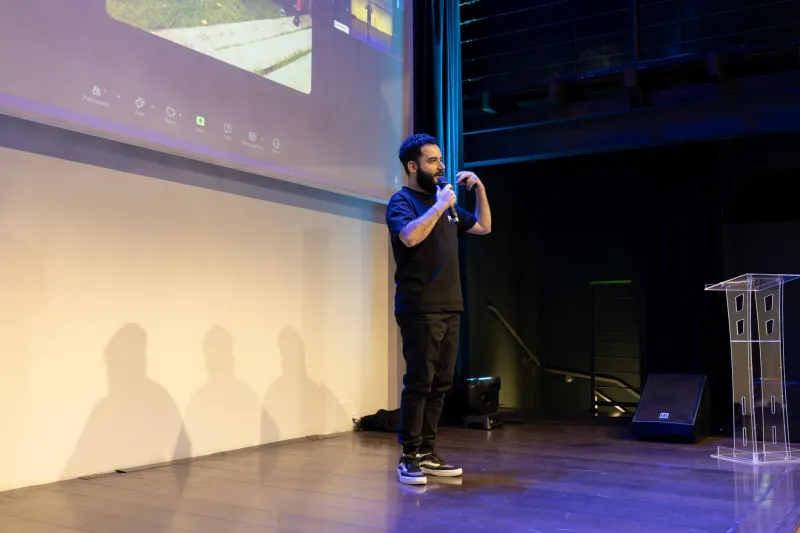
His breakthrough moment came during a presentation to 500 sales managers in Detroit. Midway through his opening, Ed hit a particularly bad stutter on the word "success." Instead of pushing through, he stopped, smiled, and said, "See? Even I have trouble with that word sometimes. Maybe that's why I understand how hard it really is."
The room erupted in applause. Not polite conference clapping — genuine, sustained applause from people who recognized truth when they heard it.
The Books Nobody Saw Coming
Publishers initially balked at Ed's book proposals. How could someone who struggled with speech write about communication? But "Stumbling Toward Success" became a surprise bestseller in 1991, followed by three more books that sold over two million copies combined.
Readers connected with Ed's message because it acknowledged what most self-help books ignored: success is messy, uncertain, and often embarrassing. His writing style mirrored his speaking — direct, honest, and completely unafraid of imperfection.
The Legacy of Authentic Struggle
By the time Ed retired from active speaking in 2010, he'd addressed over three million people across 47 states. His client list included Fortune 500 companies, professional sports teams, and three U.S. presidents. Not bad for someone who once couldn't order a pizza without breaking into a cold sweat.
But Ed's real impact wasn't measured in speaking fees or book sales. It was in the thousands of people who learned that their perceived weaknesses might actually be their greatest strengths.
"Ed taught me that my anxiety wasn't something to hide," says former attendee Sarah Rodriguez, now a successful entrepreneur. "It was something to acknowledge and work with. That changed everything."
The Stutter That Started a Revolution
Ed Tronolone's story challenges everything we think we know about communication and success. In a world obsessed with polish and perfection, he proved that authenticity beats articulation every time.
His childhood impediment didn't disappear — Ed still stutters, especially when tired or stressed. But somewhere along the way, he stopped seeing it as a limitation and started recognizing it as his superpower. The thing that made him different became the thing that made him irreplaceable.
In an age of carefully crafted social media personas and filtered reality, Ed's message feels more relevant than ever: the world doesn't need more perfect people. It needs more real ones. And sometimes, the most real voice is the one that has to fight for every word.