
Maya Lin: The Student Whose 'Crazy' Idea Became Sacred Ground
In 1981, a 21-year-old Yale architecture student named Maya Lin submitted a design for the Vietnam Veterans Memorial that made the judges do a double-take. No heroic statues, no soaring monuments — just a simple black wall cut into the earth, listing names of the dead.
 Photo: Vietnam Veterans Memorial, via www.gilbaneco.com
The backlash was immediate and brutal. "A black gash of shame," critics called it. Veterans' groups organized protests. Established architects dismissed it as amateur work from someone who "didn't understand memorial design." One veteran told reporters, "This is what happens when you let kids play with serious things."
Lin's crime? She was young, Asian-American, female, and her design broke every rule about how America honors its heroes. "They wanted something that looked like every other war memorial," Lin recalls. "I wanted something that felt like what war actually costs."
Today, the Vietnam Veterans Memorial draws over five million visitors annually. People leave flowers, letters, and mementos along the black granite wall. What critics called a "gash" became the most emotionally powerful memorial in Washington D.C. Lin didn't just design a monument — she redefined how a nation could grieve.
Ludwig van Beethoven: The Composer Who Couldn't Hear His Revolution
When Ludwig van Beethoven began losing his hearing in his late twenties, the musical establishment of Vienna wrote him off. "A composer who cannot hear is no composer at all," declared one prominent critic. Concert promoters stopped booking him. Fellow musicians whispered that his best work was behind him.
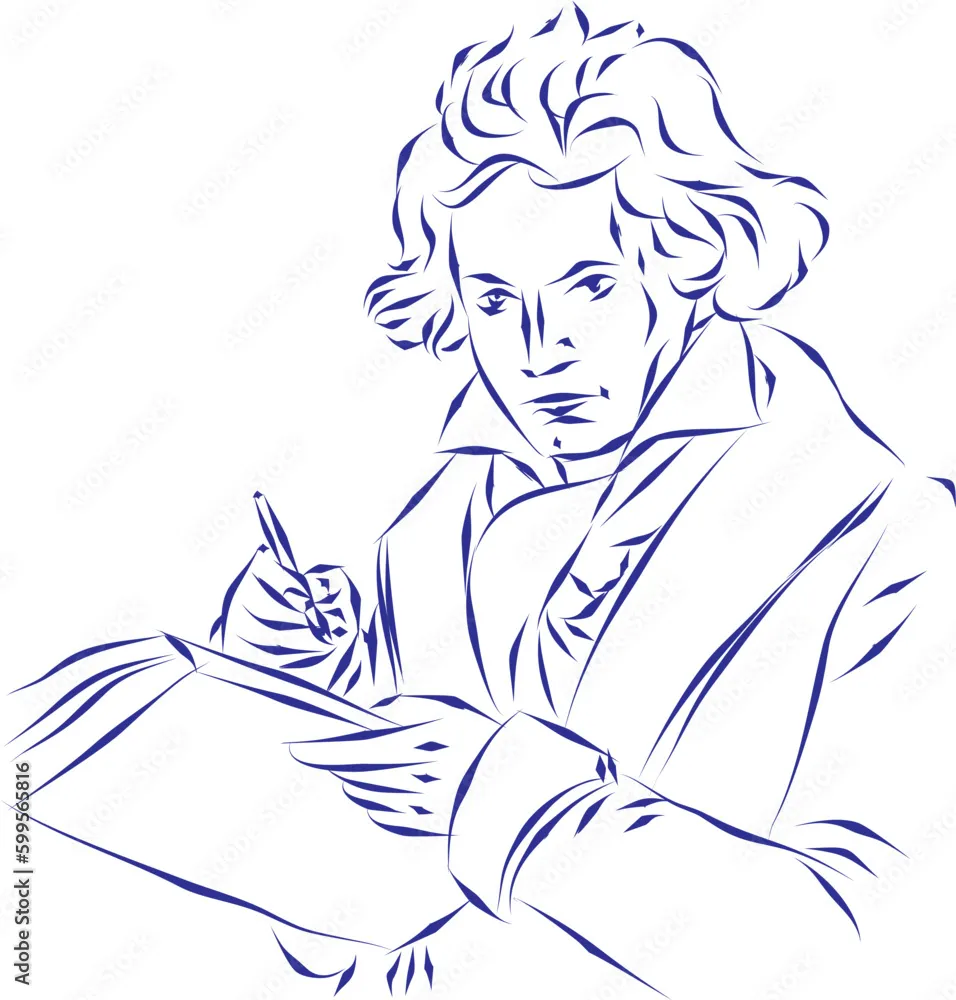 Photo: Ludwig van Beethoven, via as1.ftcdn.net
Beethoven's response was his Ninth Symphony — composed when he was completely deaf. The premiere in 1824 was a disaster, by traditional standards. Beethoven couldn't hear the orchestra, couldn't follow the conductor, couldn't gauge the audience's reaction. Critics called it "chaotic" and "unlistenable."
What they didn't realize was that Beethoven's deafness had freed him from the constraints of conventional sound. He was composing music he felt rather than heard, creating symphonies that existed first in his mind, then in his soul. The Ninth Symphony's "Ode to Joy" became the anthem of human brotherhood, adopted by revolutionaries, reformers, and eventually, the European Union.
Beethoven proved that limitation could become liberation — that losing one sense could heighten all the others.
Katherine Johnson: The Computer Who Calculated Her Way to the Stars
In 1958, Katherine Johnson was a "computer" — that's what NASA called the women who performed complex calculations by hand. When the agency decided to use electronic computers for John Glenn's orbital mission, the astronaut had one request: "Get the girl to check it."
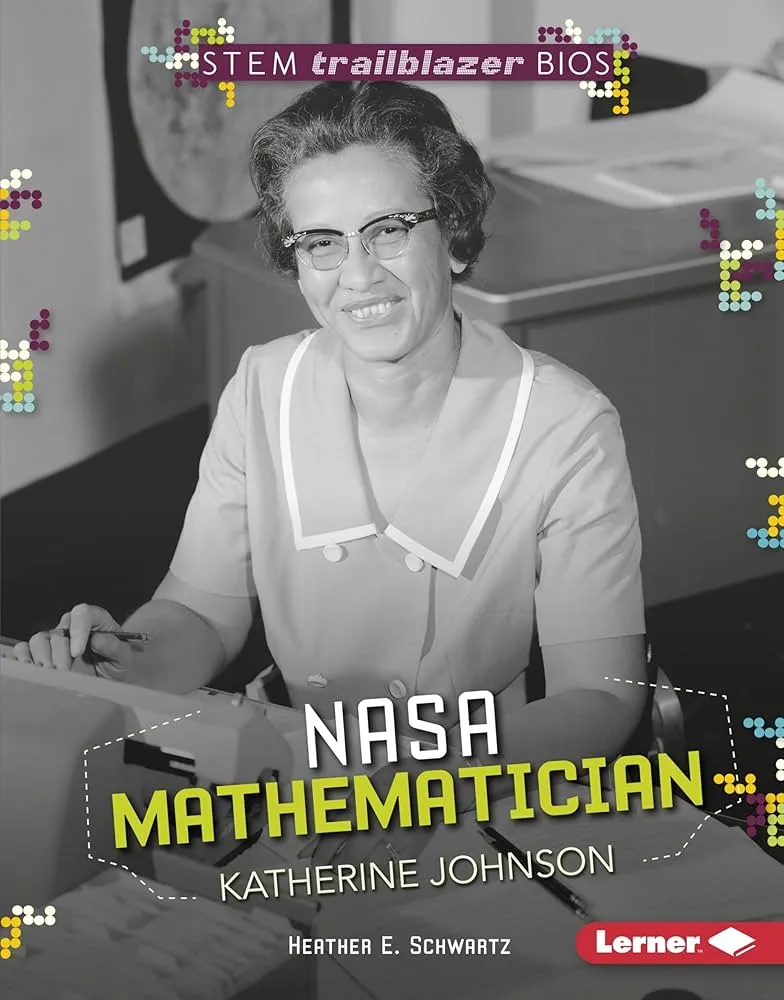 Photo: Katherine Johnson, via m.media-amazon.com
The "girl" was a 43-year-old Black mathematician from West Virginia who'd been ignored by colleagues, excluded from meetings, and forced to use segregated bathrooms. When Johnson asked to attend editorial meetings for flight reports, her supervisor laughed. "Women don't go to those meetings," he said.
Johnson kept asking anyway. Eventually, her supervisor got tired of saying no. In those meetings, Johnson's questions were so insightful that engineers started seeking her input on mission-critical calculations. Her trajectory analysis for Glenn's flight was so precise that the mission's success depended on her work.
By the time NASA sent astronauts to the moon, Katherine Johnson was calculating launch windows and lunar landing coordinates. The woman they'd tried to keep out of meetings became the mathematician they couldn't launch without.
Ray Kroc: The Milkshake Machine Salesman Who Fed America
In 1954, Ray Kroc was a 52-year-old traveling salesman peddling milkshake machines to drive-in restaurants. When he pitched McDonald's founders Dick and Mac McDonald on expanding their single California restaurant, they laughed him out of the room. "We like our business small and simple," they told him.
Kroc saw something the McDonald brothers couldn't: a system that could be replicated anywhere. Not just a restaurant, but a formula for consistency, speed, and quality that could work from coast to coast. The brothers thought he was crazy. "Nobody wants the same hamburger everywhere," they said.
Kroc mortgaged his house to open the first franchised McDonald's in Des Plaines, Illinois. Restaurant industry experts predicted failure. "Americans like variety," wrote one food critic. "This cookie-cutter approach will never work."
Fifty years later, McDonald's serves 70 million customers daily in over 100 countries. Kroc didn't just build a restaurant chain — he created the template for modern franchising, proving that sometimes the craziest ideas are the most obviously right.
Maggie Walker: The Daughter of Slaves Who Built a Banking Empire
In 1903, Maggie Lena Walker announced her plan to open a bank in Richmond, Virginia. The idea was audacious for multiple reasons: she was Black, she was a woman, and she was proposing to serve customers that white banks routinely rejected.
The banking establishment's response was swift and dismissive. "Colored people don't understand money," one bank president told the Richmond Times-Dispatch. "And women certainly don't understand business. This venture will fail within six months."
Walker had been hearing variations of that message her entire life. Born to formerly enslaved parents, she'd worked as a teacher and insurance agent before recognizing that Black communities needed financial institutions they could trust. When she applied for a banking charter, regulators made her jump through hoops no white male applicant ever faced.
The St. Luke Penny Savings Bank opened its doors on November 2, 1903, with Walker as president — making her the first Black woman to charter and run a bank in the United States. Within five years, the bank had over 50,000 depositors and had financed hundreds of Black-owned businesses and homes.
Walker proved that the people the establishment overlooked weren't just potential customers — they were an entire untapped economy waiting for someone brave enough to serve them.
The Pattern of Transformation
These five Americans shared more than just revolutionary ideas — they shared the experience of being underestimated by people who couldn't see past their own assumptions. Lin was too young and different. Beethoven was too disabled. Johnson was the wrong race and gender. Kroc was too old and ordinary. Walker was everything the establishment thought disqualified someone from success.
But that's exactly what made them dangerous. They weren't bound by the conventional wisdom that limited their critics. They saw possibilities where others saw problems, opportunities where others saw obstacles.
Their rejections weren't setbacks — they were proof that they were onto something the room wasn't ready to understand. In America, being laughed out of the room has always been the first step toward changing it forever.