When One Hand Was Enough: The Secretary Who Lost an Arm and Found Her Empire
The Sound of Everything Stopping
Signe Larson was twenty-two and three weeks into her first real job when the machine grabbed her arm and wouldn't let go. The textile factory where she worked the morning shift fell silent except for her screaming and the mechanical grinding that continued for seventeen seconds—long enough for everyone to understand that the girl from Minnesota who'd moved to Chicago to make something of herself had just lost the hand that was supposed to make her fortune.
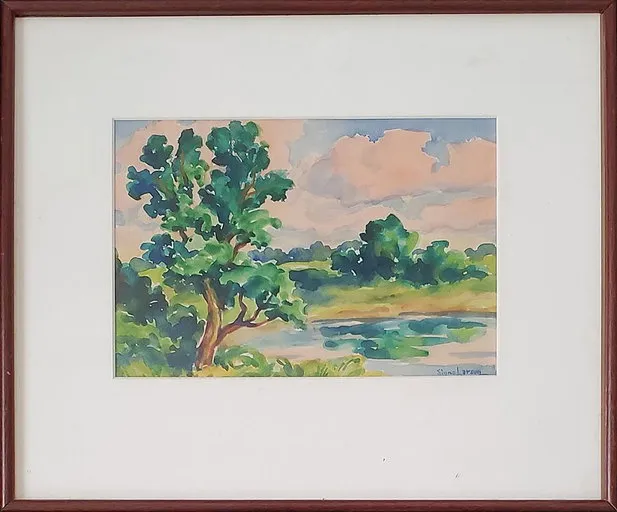 Photo: Signe Larson, via p1.liveauctioneers.com
It was 1931. The Depression had already stolen most people's dreams, and now it seemed to have stolen Signe's future along with her dominant arm. Secretarial work—the one reliable path for working women—required two hands that could fly across a typewriter keyboard. Signe now had one hand and a stump that ended just below her right elbow.
The hospital social worker was kind but direct: "You'll need to think about other options, dear. Maybe your family back home could take you in."
Signe Larson had not moved 400 miles from a Minnesota farm to go home defeated by a machine.
Learning to Fight With One Hand
While her arm healed, Signe spent her days at the Chicago Public Library, not reading novels or newspapers, but studying typing manuals and stenography guides with the intensity of a medical student. She was looking for something the experts said didn't exist: a way to do two-handed work with one hand.
Traditional shorthand required both hands—one to write, one to hold the paper steady and turn pages. Traditional typing demanded ten fingers dancing across keys in precise coordination. But Signe noticed something the manuals didn't mention: most of the actual work happened in patterns, and patterns could be memorized, modified, and eventually mastered.
She developed her own shorthand system, using symbols that flowed naturally from her left hand's movement across the page. Where traditional stenography used separate marks for common letter combinations, Signe created flowing scripts that captured entire words in single gestures. What looked like elaborate doodling was actually a code that let her transcribe speech faster than most two-handed secretaries.
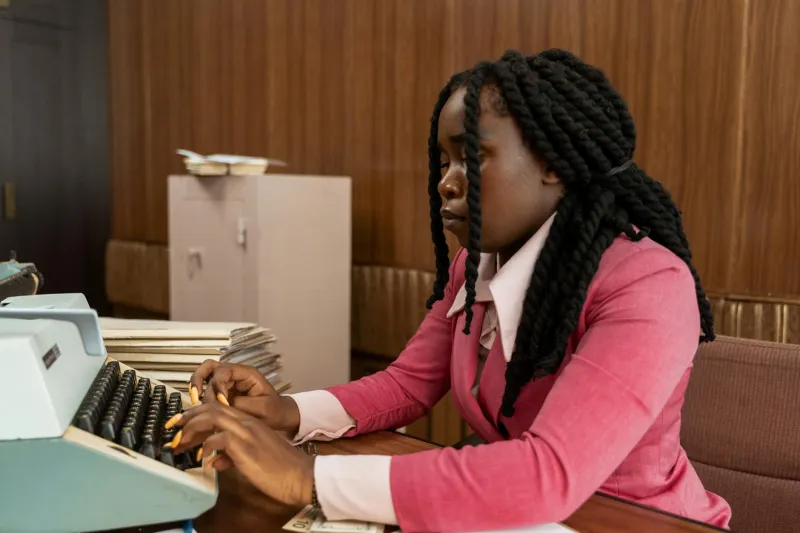
The typing took longer to figure out. Signe bought a used typewriter with money borrowed from her landlady and spent hours mapping out which keys her left hand could reach, which required the stump of her right arm to hold down shift keys, and which combinations could be handled by repositioning her entire body.
The Woman Who Typed Everything Twice
Signe's breakthrough came when she realized her limitation was also her advantage. Because she had to work slower and more deliberately than other typists, she caught mistakes that others missed. Because she had to think about every keystroke, she understood the documents she was typing in ways that rapid-fire typists never did.
When she finally felt ready to look for work, Signe walked into the law offices of Morrison & Associates and asked to type a sample document. The senior partner, Harold Morrison, was skeptical but curious. He handed her a complex contract and expected to watch her struggle.
Instead, he watched her work with a precision that made his regular secretary look careless. Signe didn't just type the contract—she caught three errors in the original document, suggested clearer wording for two confusing clauses, and finished with a perfect copy that required no corrections.
Morrison hired her on the spot, but with a warning: "The clients don't need to know about your... situation. Just do the work."
Signe had no intention of hiding. She had bigger plans.
Building an Empire One Case at a Time
Within six months, Signe was doing more than typing. She was researching cases, writing briefs, and handling client communications with a thoroughness that impressed even the senior partners. Her physical limitation had forced her to develop a mental precision that made her invaluable.
But she was still just a secretary, and in 1932, that meant she'd never be anything more.
So Signe enrolled in night school at Northwestern University's law program. She worked at Morrison & Associates during the day, attended classes four nights a week, and spent weekends in the law library. Her professors were initially uncomfortable with a one-armed woman in their classroom, but Signe's grades silenced the skeptics.
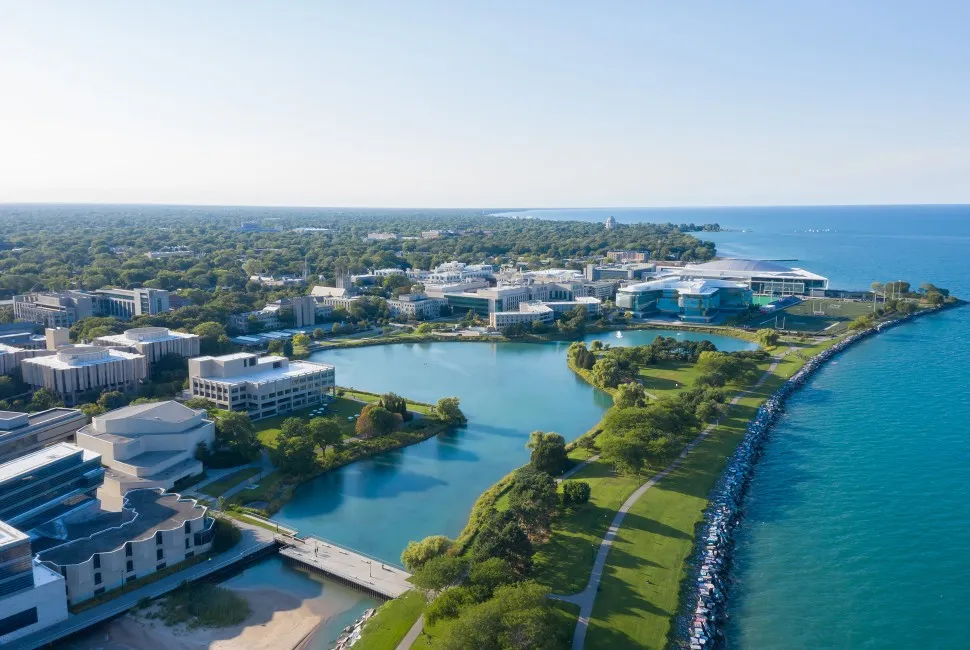 Photo: Northwestern University, via news.northwestern.edu
She graduated in 1936, passed the Illinois bar exam on her first try, and immediately faced a new problem: no law firm in Chicago would hire a one-armed female attorney.
When They Won't Let You In, Build Your Own Door
Signe Larson opened her own practice in 1937 with $200 in savings, a rented office above a drugstore, and a client list that consisted entirely of people who couldn't afford the big firms. She specialized in cases that other lawyers considered too small or too complicated: workplace injury claims, immigration disputes, and family law matters that required patience and precision rather than political connections.
Her disability became her calling card. Clients who had been injured, discriminated against, or overlooked by society found an advocate who understood what it meant to be written off before you'd had a chance to prove yourself. Signe's office became known as the place where people went when everyone else said their case was hopeless.
By 1945, Larson & Associates employed twelve attorneys and had won some of the most important worker protection cases in Illinois history. Signe's one-handed typing had evolved into a legal empire built on the simple principle that limitations could become strengths if you were stubborn enough to figure out how.
The Hand That Changed the Law
Signe Larson never got her arm back, but she got something more valuable: proof that the thing that almost destroyed her career had actually created it. Her physical limitation had forced her to develop skills that two-handed lawyers never needed: absolute precision, creative problem-solving, and an understanding of what it meant to fight from a position of perceived weakness.
When she retired in 1967, Signe had argued cases before the Illinois Supreme Court, trained dozens of young attorneys, and built a practice that specialized in representing people who had been told they didn't have a chance.
The woman who was told her career was over before it started had spent thirty years proving that sometimes the best way to build something extraordinary is to start with what everyone else considers broken.