The Most Unlikely Victory Lap in Marathon History
On April 16, 2018, as freezing rain pelted the streets of Boston and elite runners dropped out in droves, a Japanese government worker who'd never had a professional coach crossed the finish line first. Yuki Kawauchi, soaked to the bone and grinning like he'd just pulled off the greatest practical joke in sports history, had won the Boston Marathon.
The professionals who'd trained in Kenya and altitude tents? Most of them were already in warm cars, heading back to their hotels. The guy who'd trained on his lunch breaks and weekend long runs? He was wearing the laurel wreath.
The 5-to-9 Revolutionary
While American distance runners obsess over finding the perfect training environment and professional support, Yuki Kawauchi was proving them all wrong from a cubicle in Saitama Prefecture. His day job: processing paperwork for the local government's academic affairs department. His training schedule: whatever time he could squeeze around his 9-to-5 responsibilities.
Most mornings, Kawauchi was running in the dark at 5 AM, logging miles before catching the train to work. Lunch breaks meant quick runs around the government building. Evenings were for longer sessions, often alone, guided by a training plan he'd written himself.
This wasn't how elite distance running was supposed to work. Where were the altitude camps? The team of coaches and physiologists? The corporate sponsorship that freed him from mundane concerns like a day job?
Kawauchi didn't have any of that. What he had was something the professional system had forgotten: pure, stubborn love for running fast.
Too Old, Too Slow, Too Late
By conventional wisdom, Kawauchi's Boston victory should have been impossible. At 31, he was already considered past his prime in a sport where most elites peak in their mid-twenties. His personal best of 2:08:14 was fast, but not world-class fast. And his approach to racing — running every weekend, sometimes twice a week — violated every principle of modern periodization.
Professional coaches looked at his schedule and winced. Racing that frequently was supposed to lead to burnout and injury. Training without scientific support was supposed to limit your potential. Holding down a full-time job was supposed to prevent the recovery elite athletes need.
Kawauchi ignored all of it. While other runners were carefully managing their race calendars, he was running everything from local 10Ks to international marathons. His philosophy was beautifully simple: the best training for racing is racing.
The Weather That Separated Pretenders from Legends
The 2018 Boston Marathon presented conditions that would have been perfect for a Nordic skiing competition: 39 degrees, driving rain, and headwinds that felt like running into a cold wall. Elite runners — athletes who'd been coddled in perfect training conditions — began dropping out before the halfway point.
For Kawauchi, this was just another day at the office. His training in Japan meant dealing with everything from summer humidity that felt like breathing soup to winter conditions that made Boston's weather seem mild. He'd never had the luxury of perfect conditions, so he'd learned to excel in imperfect ones.
As the race progressed and the field thinned, Kawauchi moved up steadily. He wasn't running the fastest splits, but he was the only one not slowing down. While others fought the weather, he embraced it.
The Finish That Changed Everything
With two miles to go, Kawauchi found himself in the lead group. The professionals who were supposed to drop him in the final miles were nowhere to be seen — they'd already dropped themselves. As he made the turn onto Boylston Street, the impossible was becoming inevitable.
His winning time of 2:15:58 was slow by Boston standards, but it didn't matter. In conditions that broke most of the field, the amateur had outlasted the professionals. The government worker had outworked the full-time athletes.
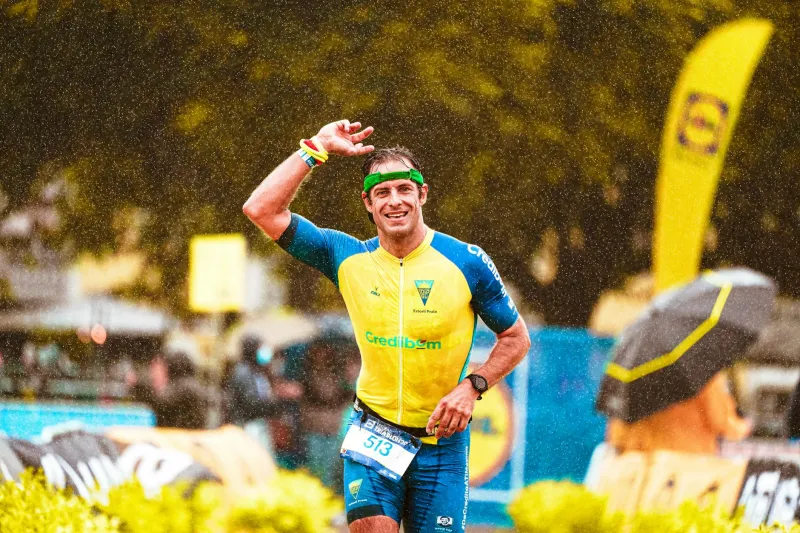
The victory photo captures everything: Kawauchi soaked and smiling, arms raised not in the calculated pose of a professional athlete, but in the genuine joy of someone who'd just proved that the establishment had it all wrong.
Rewriting the Rules of Peak Performance
Kawauchi's Boston victory wasn't just an upset; it was a complete repudiation of how we think about athletic excellence. He proved that passion could beat science, that consistency could beat perfection, that someone training around a day job could beat athletes whose only job was running fast.
His approach challenged fundamental assumptions about professional sport. Maybe you don't need to sacrifice everything else in your life to achieve excellence. Maybe the hunger that comes from maintaining a regular job actually fuels performance rather than limiting it. Maybe the freedom to train exactly as you want, without coaches and sponsors second-guessing every decision, is worth more than all the professional support in the world.
The Amateur Who Redefined Professional
After Boston, Kawauchi finally turned professional — but on his own terms. He kept the high-frequency racing that experts said would destroy him. He kept the self-coached approach that conventional wisdom said was limiting. He kept running like someone who genuinely loved the sport rather than someone trying to optimize it.
The results spoke for themselves. In the years following Boston, he continued running sub-2:10 marathons well into his thirties, an age when most distance runners are considering retirement. His longevity became another argument against the conventional approach to elite athletics.
The Lesson That Transcends Sport
Yuki Kawauchi's story resonates far beyond running because it challenges a broader cultural assumption: that excellence requires total specialization and professional support. His victory suggests that sometimes the opposite is true — that maintaining perspective through other responsibilities, that training with joy rather than obligation, that following your own instincts rather than expert advice can lead to achievements the experts said were impossible.
In a world obsessed with optimization and professionalization, Kawauchi proved that sometimes the most powerful force is simply refusing to accept the limitations others place on you. The government worker who was supposed to be too old, too slow, and too amateur didn't just win Boston — he redefined what it means to be a champion.
His victory reminds us that the most extraordinary achievements often come from the most ordinary circumstances, as long as there's someone extraordinary enough to recognize the opportunity hiding inside the routine.