A Borrowed Horn and a Second Chance: How Chet Baker Escaped Nothing to Become Everything
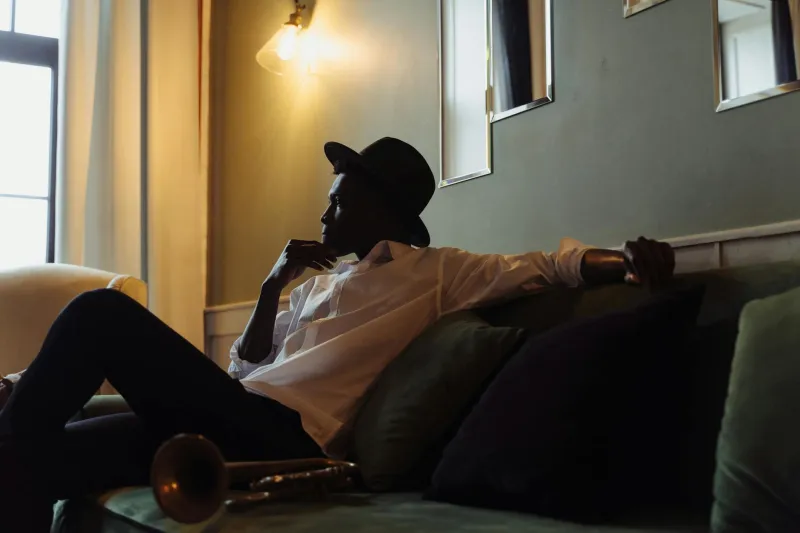
The Boy Nobody Expected
Chet Baker was born into the kind of American poverty that doesn't make the news. His father worked odd jobs in Oklahoma during the Depression. His mother drifted in and out of his life. By the time Chet was old enough to understand what he was missing, he'd already learned the most important lesson of survival: don't expect much, and you won't be disappointed.
But something shifted when a school music teacher handed him a trumpet.
It wasn't his trumpet. It wasn't even a particularly good one. But in the hands of a lanky, restless kid who had nothing else to hold onto, it became a lifeline. Chet practiced with the kind of hunger that only comes from having nothing to lose. The instrument became less about music and more about escape—a physical way to reach toward something that felt bigger than his circumstances.
The Audition That Changed Everything
When Chet turned sixteen, he joined the Army, partly out of necessity and partly because it felt like the only available path forward. It was during his military service that the real turning point arrived: a band audition that would have been easy to skip.
He didn't skip it.
What happened in that audition room was something even Chet couldn't have predicted. His tone—cool, lyrical, almost conversational—stood out immediately. There was nothing flashy about it. No technical showing off. Just a voice that sounded like it had something true to say. The bandleader heard it. Everyone heard it.
Within a few years, Chet Baker wasn't just playing in military bands. He was sitting alongside some of the most innovative jazz musicians of the era. By his mid-twenties, he was recording albums that would define cool jazz itself. The kid from nowhere had become the voice of a generation.
Why the Outsider Heard It First
What's remarkable about Chet Baker's rise isn't just that he made it—it's how he made it. He didn't arrive in New York with connections or credentials. He didn't have a family legacy in music or the resources to study at prestigious conservatories. What he had was something you can't teach: an ear that had learned to listen because listening was survival.
Poverty teaches you to hear what's real and what's performance. Instability teaches you to find truth in small moments. When Chet picked up that trumpet, he wasn't trying to become a virtuoso in the classical sense. He was trying to say something that his circumstances had made him uniquely positioned to express.
His music reflected that. It was intimate, vulnerable, and utterly without pretense. In an era when jazz was becoming increasingly complex and show-offy, Chet Baker's approach felt like a confession. He made the trumpet sound like a voice—not a instrument playing at you, but a person talking to you.
The Legacy of the Unlikely
Chet Baker's career wasn't without tragedy. Addiction, legal troubles, and personal demons would later shadow his life and ultimately cut it short. But those struggles don't erase what he accomplished: he proved that the most unexpected people can create the most enduring art.
He never went to music school. He never had the advantages that breed classical musicians. He had a borrowed horn, an instinct to show up when it mattered, and the kind of hunger that only comes from having almost nothing.
That combination turned a poor Oklahoma kid into one of the most influential jazz musicians in American history. It's a reminder that sometimes the people with the least to lose are the ones who change everything.