
The Dictionary Lessons
Andrea Jung's first business education happened on a factory floor in Massachusetts, watching her mother flip through a worn English dictionary during her lunch break. Every day, the same ritual: unwrap a sandwich, open the dictionary, memorize five new words, then return to work assembling electronic components.
Jung's mother had been a highly trained architect in Hong Kong. In America, she was just another immigrant worker whose credentials meant nothing and whose accent marked her as different. But Jung noticed something the other kids might have missed: her mother wasn't just learning English. She was studying America itself, one word at a time.
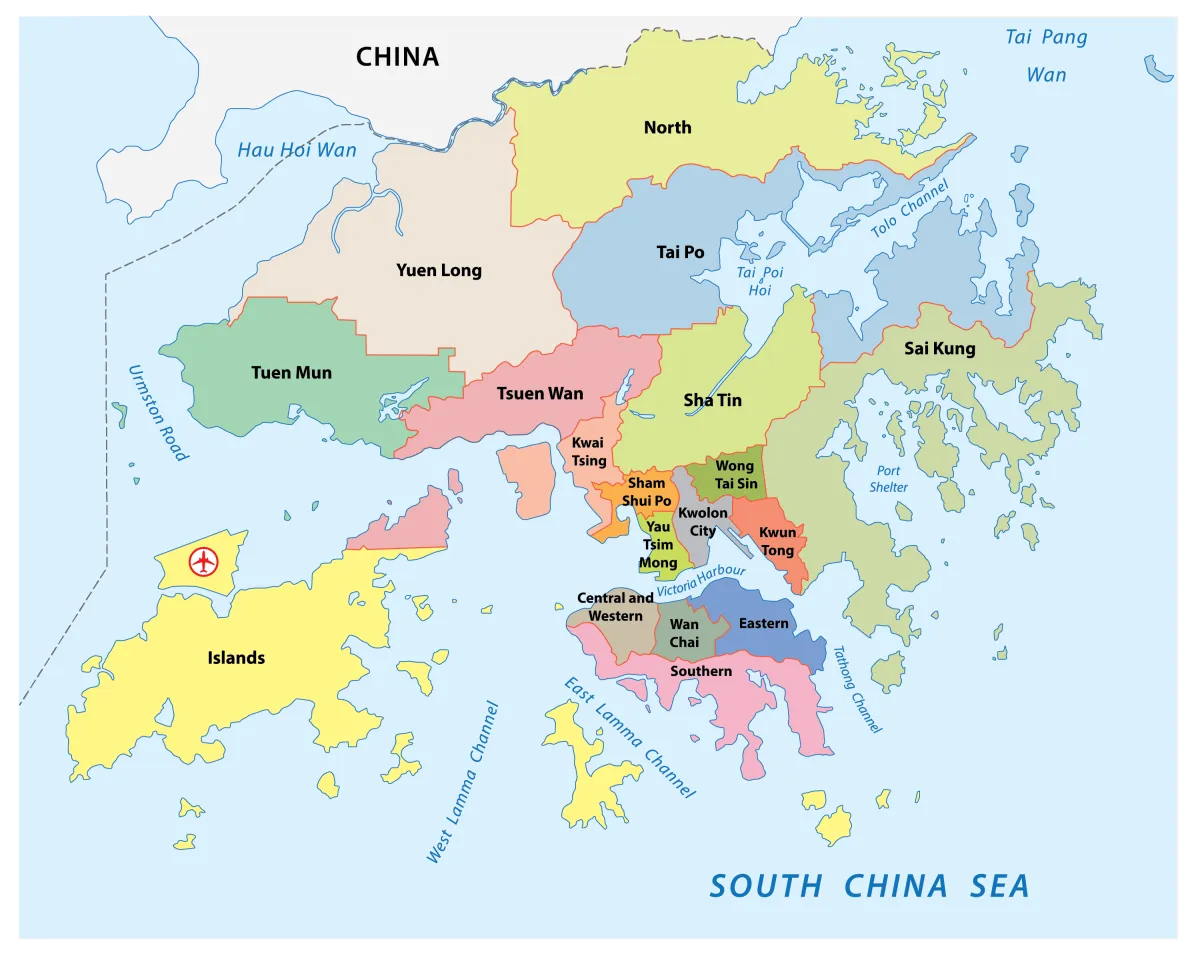 Photo: Hong Kong, via www.worldatlas.com
This wasn't the kind of business training they teach at Harvard. This was something more fundamental: the art of reinventing yourself in a place that doesn't recognize who you used to be.
The Translation Game
Growing up as the daughter of Chinese immigrants in the 1960s meant living between two worlds that rarely understood each other. At home, Jung translated her parents' ambitions into American possibilities. At school, she translated American culture back to parents who were still figuring out how this new country worked.
This constant translation wasn't just linguistic—it was strategic. Jung learned to read situations from multiple angles, to understand what people really meant versus what they actually said, to navigate systems that weren't designed for people who looked like her family.
While her classmates took their place in American culture for granted, Jung was studying it like an anthropologist, learning the unwritten rules that determined who succeeded and why.
The Corporate Laboratory
When Jung entered the corporate world in the 1980s, she carried with her an unusual advantage: she was used to being underestimated. Boardrooms full of men in identical suits assumed she was there to take notes or serve coffee. She used their assumptions as camouflage.
At Bloomingdale's, then at I. Magnin, Jung applied the same systematic observation skills she had learned watching her parents navigate American culture. She studied not just what customers bought, but why they bought it. She noticed patterns that others missed because she was always looking for the logic underneath surface behavior.
Her immigrant background, which some saw as a liability, became her secret weapon. She understood what it meant to want to fit in, to aspire to something better, to reinvent yourself through the choices you made.
The Avon Opportunity
When Jung joined Avon in 1994, the company was struggling with an identity crisis. Founded on the revolutionary idea that women could earn their own money selling beauty products door-to-door, Avon had lost its way in a changing marketplace. The direct-sales model that had once empowered women was beginning to feel outdated.
Jung saw something others missed: Avon's problem wasn't its business model. Its problem was that it had forgotten its own revolutionary origins. The company that had pioneered female entrepreneurship was now being run like just another cosmetics company.
She began applying the same translation skills she had learned in childhood, but now she was translating between Avon's traditional customer base and a new generation of women who had different needs and expectations.
The Reinvention
When Jung became CEO in 1999, she was the first woman and first Asian-American to lead a Fortune 500 company. But the real breakthrough wasn't her appointment—it was her approach.
Instead of abandoning Avon's direct-sales heritage, Jung modernized it. She understood that women still wanted economic independence, but they needed new tools and new opportunities. She expanded into international markets, embraced digital technology, and repositioned Avon as a company that helped women build businesses, not just sell products.
The strategy worked because Jung understood something that traditional business analysis might have missed: the emotional core of what Avon represented to its customers. She had learned from watching her mother that success wasn't just about economic advancement—it was about dignity, recognition, and the chance to determine your own future.
The Cultural Advantage
Jung's outsider perspective became increasingly valuable as business became more global. While other executives struggled to understand international markets, Jung had been navigating cultural differences her entire life. She knew how to adapt core principles to local contexts, how to maintain authenticity while embracing change.
Under her leadership, Avon became one of the largest direct-selling companies in the world, with operations in over 100 countries. The same skills that had helped her parents succeed in America—careful observation, strategic adaptation, relentless preparation—became the foundation for global expansion.
The Lasting Lesson
Jung's story reveals something important about advantage and disadvantage in business. The same experiences that made her childhood more challenging—cultural displacement, economic uncertainty, the need to constantly prove herself—also gave her skills that money can't buy.
She learned early that success requires more than talent or education. It requires the ability to see opportunities that others miss, to understand customers that others overlook, to persist when others give up.
By the time Jung stepped down as CEO in 2012, she had transformed not just Avon but the entire conversation about what leadership could look like. She had proven that outsider status isn't something to overcome—it's something to leverage.
The factory floor where her mother studied English dictionaries had been the first classroom in a business education that no MBA program could have provided. Sometimes the best preparation for leading a Fortune 500 company starts with watching your parents figure out how to build a life from nothing, one word at a time.